

Key Takeaways
- Effective Oktoberfest translation requires conveying cultural meaning—not just literal word-for-word equivalents (e.g., “Prost” → “Cheers” misses ritual, timing, eye contact and atmosphere).
- Translators must decide when to translate, explain, adapt, or retain German/Bavarian terms; preserving authentic terms (Dirndl, Lederhosen) with concise explanations often works best.
- Multilingual content should cover the entire visitor journey (discovery, booking, arrival, participation, post-trip) and distinguish energetic marketing copy from precise functional information like rules, directions, and safety.
- Avoid flattening traditions into stereotypes; provide context so audiences understand history, regional associations, etiquette and the broader festival experience rather than just iconic images.
- Organizations should use native-language expertise, build consistent multilingual terminology guides, and work with professional language partners to maintain clarity, cultural accuracy, and consistency across touchpoints.
What happens when a centuries-old Bavarian celebration becomes a global tourism experience?
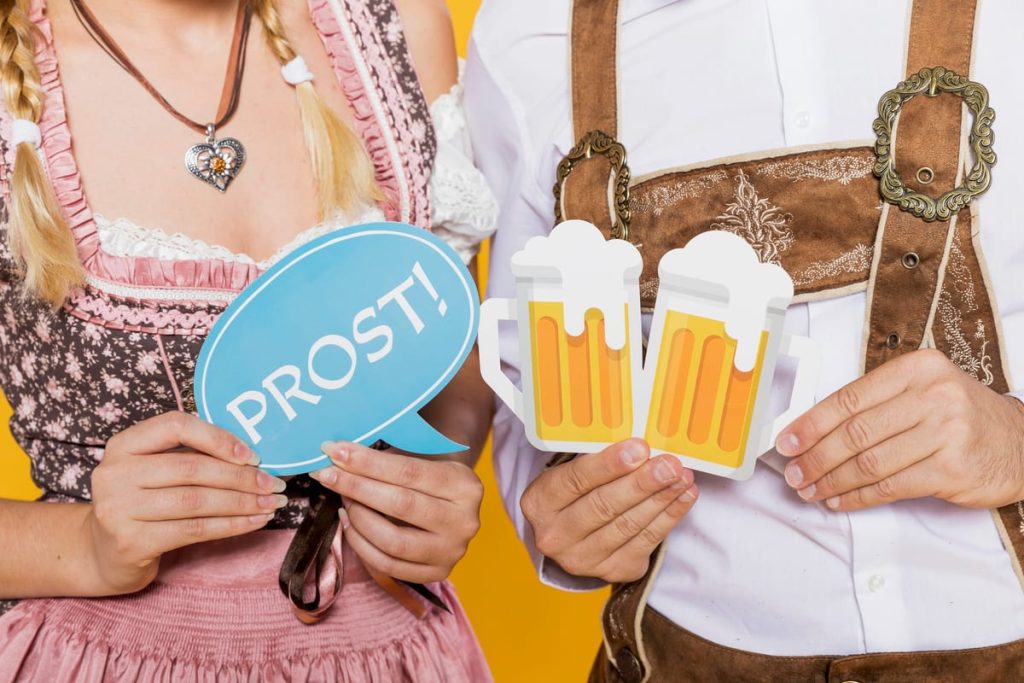
Oktoberfest attracts millions of visitors to Munich and has inspired related celebrations around the world, but communicating the festival to international audiences involves much more than translating “Prost!” as “Cheers!”
Teams handling large-scale event content can rely on New York translation services for tourism brands to coordinate multilingual materials efficiently.
Effective Oktoberfest translation must carry cultural meaning, explain unfamiliar customs, support travelers, and preserve the character that makes the event worth visiting.
For tourism boards, hospitality brands, event organizers, and cultural organizations, Oktoberfest offers valuable lessons about translating experiences without turning them into generic tourist products.
Oktoberfest Translation Is About More Than Words
Translation in tourism often looks simple from the outside.
A visitor needs to understand a website, hotel guide, festival schedule, menu, ticket, or sign, so the text is converted into another language.
But culture makes the job more complicated.
Consider the word Prost.
English speakers can understand it as “Cheers,” but that basic equivalent does not communicate everything surrounding the custom: when people say it, how they raise their glasses, why eye contact may matter socially, and how the ritual contributes to a shared festival atmosphere.
The same problem appears throughout Oktoberfest.
Terms connected with clothing, food, music, beer tents, regional customs, and Bavarian identity may not have neat equivalents in another language.
Translators therefore need enough cultural knowledge to determine when a term should be translated, explained, adapted, or retained in German.
For tourism organizations, that distinction matters.
A translation can be technically correct while still leaving visitors confused about what they are supposed to expect or do.
Good tourism communication closes that gap.
When the Festival Ends, the Cultural Meaning Continues
As Oktoberfest comes to a close on October 5, the tents may empty and the music may quiet down, but the cultural exchange does not end with the final toast. Visitors return home carrying German words, food traditions, songs, photographs, stories, and impressions of Bavarian life. In that sense, Oktoberfest becomes more than an event—it becomes a temporary meeting point between cultures.
Translation plays an interesting role in what happens next. A phrase heard in Munich may appear later in a travel article, social media post, tourism campaign, documentary, restaurant menu, or festival promotion thousands of miles away. Each time that happens, the translator faces a choice: translate the words directly or preserve the cultural idea behind them. Our guide to festival translation for international guests explores how cultural phrases travel across borders and media.
Translating Oktoberfest Traditions Without Losing Their Identity
Oktoberfest is strongly connected with Bavarian traditions, and those traditions are part of its tourism appeal.
Visitors encounter Lederhosen, Dirndl, traditional music, regional foods, decorated beer tents, parades, ceremonial activities, and vocabulary they may never have seen before.
Replacing every unfamiliar German term with a broad English equivalent can remove some of that cultural identity.
Leaving everything untranslated creates the opposite problem.
Visitors may encounter attractive but meaningless terminology.
A useful approach is to preserve culturally important terms while providing concise explanations.
For example, Dirndl does not need to become simply “traditional dress.”
The original term can remain while surrounding copy explains that it refers to a style of traditional Alpine and Bavarian women’s clothing commonly associated with Oktoberfest.
This approach gives international travelers both authentic terminology and practical understanding.
The principle applies well beyond Munich.
Cultural festivals, religious celebrations, heritage attractions, food events, and traditional ceremonies often contain concepts that cannot be transferred word for word. A dedicated resource on translating seasonal and heritage cultural events outlines how organizations build consistent multilingual frameworks.
Organizations should identify which terms are essential to the culture and build consistent multilingual explanations around them.
A professional language partner such as Vanan Services Inc can help organizations maintain terminology across visitor materials while adapting explanations for different audiences.
Oktoberfest Tourism Translation Shapes the Visitor Experience
Tourism translation affects more than marketing.
It can influence almost every stage of a visitor’s journey.
Before traveling, international guests may read destination websites, accommodation pages, ticket information, transportation instructions, FAQs, accessibility details, and festival guides. Research on travel website translation and tourist decision-making shows that multilingual clarity directly influences booking behavior.
After arriving, they encounter menus, maps, signs, announcements, rules, safety information, and customer service materials.
Each touchpoint creates an opportunity for clarity or confusion.
Imagine a traveler trying to determine whether a reservation includes entry to a particular area, how to reach a venue by public transportation, or whether a menu item contains an ingredient they cannot eat.
In those situations, stylish marketing language matters less than precise communication.
Tourism organizations should therefore separate promotional translation from functional visitor information while maintaining a consistent voice.
Marketing copy may require energy and cultural flavor.
Directions, booking conditions, accessibility information, and safety instructions require exceptional clarity.
Both contribute to the same guest experience.
When multilingual content works well, visitors spend less time decoding instructions and more time engaging with the destination.
Cultural Translation Helps Avoid Stereotypes and Oversimplification
Global audiences often encounter Oktoberfest through a handful of recognizable images: giant beer glasses, pretzels, brass bands, Lederhosen, and Dirndl.
Those images are useful for quick recognition, but they do not tell the whole story.
Cultural communication becomes weaker when tourism marketing reduces a destination to a few stereotypes.
For organizations promoting heritage events, the challenge is to make unfamiliar traditions accessible without flattening their meaning.
That requires context.
Instead of presenting traditional clothing merely as a costume for photographs, multilingual content can explain its regional associations and place within the festival environment.
Instead of describing Oktoberfest only as a beer festival, organizations can communicate its history, food, music, rides, gatherings, ceremonial elements, and role in Munich’s tourism calendar.
This creates richer content while helping visitors approach local customs with greater awareness.
It also matters when campaigns move across markets.
Humor, idioms, slogans, imagery, references to alcohol, and assumptions about social behavior may work differently from one audience to another.
A phrase that sounds playful in German may sound strange, overly formal, or inappropriate after a literal translation.
Cultural review should therefore be part of multilingual tourism campaigns from the beginning rather than an afterthought immediately before publication.
What Tourism and Hospitality Brands Can Learn From Oktoberfest Translation
The lessons from Oktoberfest apply to destinations and events around the world.
First, translate for the traveler’s situation, not only their language.
A first-time visitor may require context that a local resident already understands.
Second, create a multilingual terminology guide.
Decide how names of foods, clothing, locations, traditions, ticket categories, and branded experiences should appear in each target language.
This reduces inconsistency across websites, apps, brochures, signs, menus, and social media.
Third, consider the entire visitor journey.
Translation planning should cover discovery, research, booking, arrival, transportation, participation, dining, accommodation, customer support, and post-trip communication.
Fourth, use native-language expertise alongside cultural knowledge.
Grammatically accurate copy is not automatically effective tourism copy.
Translators should understand the intended audience, communication channel, destination, and purpose of the material. Working with professional multilingual translation services ensures translators bring both linguistic accuracy and audience awareness to every project.
Finally, protect authenticity.
International accessibility does not require removing every local word or cultural reference.
Often, the strongest tourism content preserves distinctive terminology and then gives travelers enough context to understand it.
For global campaigns, Vanan Services Inc supports organizations that need multilingual communication across tourism, hospitality, events, and culturally specific content.
The goal is simple: help audiences understand what they need to know without stripping away what makes an experience distinctive.
Frequently Asked Questions About Oktoberfest Translation
Why is Oktoberfest translation different from ordinary translation?
Oktoberfest content contains culturally specific terminology, customs, foods, clothing, locations, and traditions that may not have direct equivalents in another language. A translator must consider what an international visitor already knows and what needs a short explanation. Tourism materials also serve different purposes, from persuasive advertising to practical directions. Effective translation therefore balances linguistic accuracy, cultural context, consistency, and usability.
Should German Oktoberfest terms always be translated?
Not necessarily. Some German or Bavarian terms are an important part of the cultural experience and may be better retained in the original language. The key is making sure visitors understand them. A tourism website might keep a term such as Dirndl or Lederhosen while adding a concise explanation. Organizations should make these decisions consistently rather than translating the same term differently across menus, websites, brochures, and signs.
Why does cultural context matter in tourism translation?
Travelers often lack the background knowledge local audiences take for granted. Without context, they may understand individual words while missing the meaning, etiquette, or importance of a tradition. Cultural context can also help organizations avoid awkward literal translations and oversimplified stereotypes. For tourism brands, better context creates clearer expectations and helps visitors engage more confidently with destinations, festivals, food, heritage, and local customs.
What content should tourism organizations translate for major events?
Organizations should consider the complete guest journey. That can include destination pages, advertising, booking information, ticket conditions, transportation guidance, accommodation details, maps, menus, schedules, accessibility information, venue rules, safety notices, FAQs, apps, social media, and post-event communications. Priority should go to information visitors need to make decisions, complete bookings, navigate the destination, participate appropriately, and resolve problems during their trip.
Turn Cultural Translation Into a Better Tourism Experience
Oktoberfest demonstrates why tourism translation cannot stop at replacing words in one language with words in another.
Visitors need language that helps them understand where to go, what to expect, what traditions mean, and how to participate, while destinations need communication that protects the cultural qualities people traveled to experience.
That balance becomes increasingly important as festivals, hospitality brands, attractions, and tourism campaigns reach audiences across languages and borders.
With thoughtful terminology, cultural context, audience-focused writing, and consistent multilingual communication, organizations can make traditions easier to access without making them less distinctive.
Vanan Services Inc helps tourism boards, travel companies, hospitality brands, event organizers, and cultural organizations communicate across languages while keeping clarity and cultural context at the center of the visitor experience.
When your destination has more to say than “Prost!”, make sure its meaning travels with it.