
Key Takeaways
- Diplomatic translation requires exceptional precision because small wording changes (e.g., “shall” vs. “may”) can alter legal, political, or policy commitments.
- Effective preparation before meetings—sharing agendas, briefs, glossaries, and background materials—helps translators understand context, subject terminology, and negotiation nuances.
- During negotiations, rigorous version control, coordinated workflows, and clear responsibilities are essential so revisions, current texts, and approved language remain unambiguous across languages.
- Security and confidentiality measures (secure file transfer, access controls, NDAs, retention policies) must be defined and enforced because diplomatic documents often contain sensitive information.
- A reliable multilingual meeting workflow combines approved terminology, qualified subject-specialist linguists, quality assurance/review, realistic deadlines, and a clear approval process; provider selection should consider these factors.
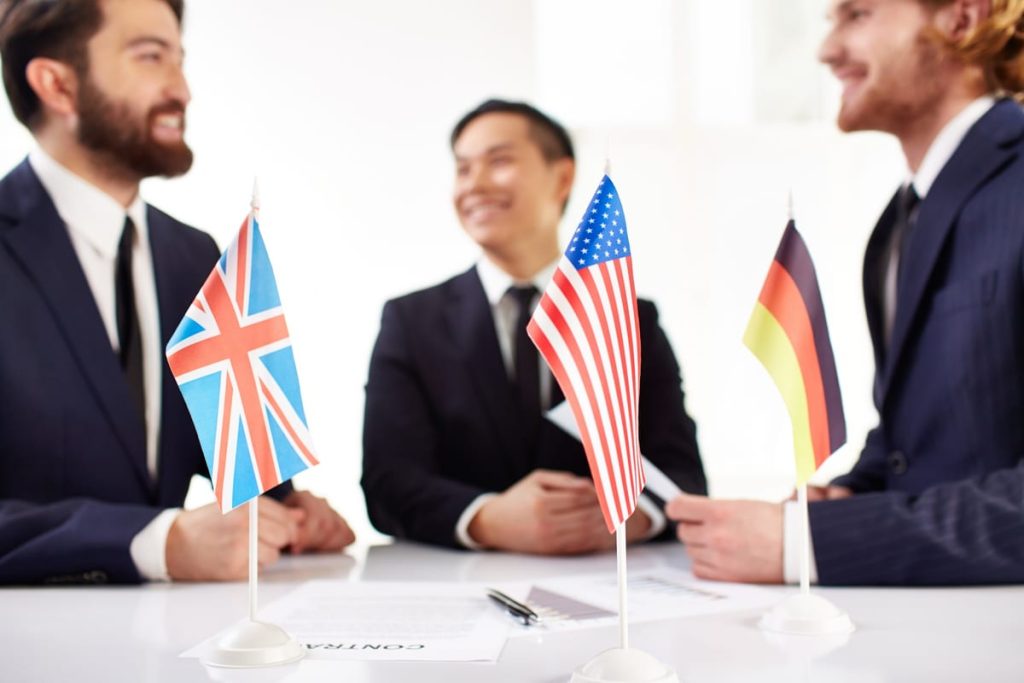
What happens when diplomats from ten countries enter one room, speak different languages, and still need to leave with the same understanding of what was decided? Explore our new york translation services for details.
Behind almost every successful multilingual meeting is a carefully coordinated language process that helps participants understand statements, proposals, technical details, and diplomatic nuances.
For government agencies, embassies, international institutions, and policy professionals, translation in international diplomacy is more than converting words from one language into another.
It helps protect meaning, maintain consistency, reduce misunderstandings, and create reliable multilingual records that officials can use long after a meeting ends.
Why Multilingual Meeting Translation Matters in International Diplomacy
Diplomacy depends on precise communication.
A small change in wording can affect how another delegation understands a commitment, policy proposal, security concern, or trade position.
This is why multilingual meeting translation requires more than basic language proficiency.
Linguists working with diplomatic material must understand terminology, context, tone, cultural differences, and the purpose of the communication.
Consider a meeting involving representatives from several countries discussing environmental policy.
Terms such as “binding commitment,” “national target,” “emissions reduction,” and “implementation framework” may have established meanings within policy documents.
Translating these phrases too loosely could create unnecessary ambiguity.
Diplomatic communication can also contain carefully chosen language.
A statement may deliberately avoid stronger wording because negotiators have agreed on language acceptable to every delegation.
The translated version therefore needs to preserve the original degree of certainty, obligation, or caution rather than making the statement stronger or weaker.
For international institutions, this linguistic consistency becomes particularly important when the same terminology appears across meeting materials, resolutions, reports, and official correspondence.
What Happens Before a Multilingual Diplomatic Meeting?
Effective diplomatic translation services begin before delegates sit down at the conference table.
Language teams may receive agendas, participant information, policy papers, speeches, briefing documents, presentations, previous agreements, and specialized terminology.
These materials help linguists understand the subject before working with meeting content.
Preparation is particularly valuable when discussions involve highly specialized fields such as defense, public health, international law, economics, climate policy, or nuclear security.
A translator familiar with general government terminology may still need extensive preparation for a meeting focused on a narrow technical subject.
Terminology management is another important step. Explore our language access in diplomacy for details.
Organizations may maintain glossaries containing approved translations for government departments, international programs, treaties, job titles, technical concepts, and recurring policy language.
Using approved terminology improves consistency across languages.
Confidentiality must also be considered before sensitive documents are shared.
Diplomatic meetings can involve restricted information, preliminary negotiating positions, security matters, or documents that are not intended for public distribution.
Organizations therefore need clear procedures governing how files are received, accessed, processed, stored, and delivered.
Professional providers such as Vanan Services Inc can support multilingual document workflows where accuracy, confidentiality, and consistent terminology are important requirements.
How Translation Supports Communication During International Meetings
A multilingual meeting may generate many types of language material.
Delegations can arrive with prepared speeches, policy summaries, briefing notes, presentations, proposed amendments, draft statements, and supporting documents.
Translation helps make these materials accessible to participants working in different languages.
The process becomes more complicated when documents change during negotiations.
A paragraph may be revised several times because one delegation objects to a particular phrase while another proposes alternative wording.
Each new version needs careful handling so participants know which text is current.
Version control is therefore an essential part of multilingual diplomatic communication.
Files should be clearly labeled, revisions should be tracked where appropriate, and outdated drafts should not be confused with approved versions.
Coordination is equally important.
Project managers, translators, reviewers, government staff, subject specialists, and diplomatic teams may all contribute to the same multilingual workflow.
Clear responsibilities help prevent duplicated work, inconsistent terminology, and missed deadlines.
Why Diplomatic Language Requires Exceptional Precision
Ordinary conversation often allows people to correct misunderstandings quickly.
Official diplomacy offers less room for ambiguity.
A single phrase may eventually appear in a memorandum, joint declaration, government report, treaty-related document, or public statement.
Words describing obligations deserve particular attention. Explore our translation for international communication for details.
Terms such as “shall,” “should,” “may,” “must,” and “will” can communicate different levels of commitment.
Replacing one with another without sufficient context can alter the perceived meaning of a policy or agreement.
Numbers also demand careful review.
Dates, monetary figures, percentages, measurements, voting results, article numbers, and statistical data must remain consistent with the source material.
Names and titles present another challenge.
Government agencies and international organizations often have established names in multiple languages.
Using unofficial alternatives can cause confusion or make official documents appear inconsistent.
Quality assurance should therefore examine more than grammar.
Reviewers may check terminology, completeness, formatting, names, numbers, references, and consistency with earlier diplomatic documents.
Cultural Nuance in Multilingual Diplomatic Communication
Diplomatic communication is shaped by culture as well as language.
Forms of address, expressions of disagreement, levels of formality, and conventions of politeness vary significantly across countries.
A sentence that sounds neutral in one language may appear unusually blunt in another.
At the same time, translators should not simply soften every difficult statement.
Their responsibility is to preserve the intended message while producing language that accurately reflects the source and works naturally for its intended audience.
This balance is particularly important when governments discuss sensitive issues.
Negotiators may intentionally use cautious or indirect language to leave room for further discussion.
A translation that removes this nuance can unintentionally change how the statement is received.
Cultural knowledge can also help with references, institutional terminology, historical context, and region-specific expressions.
For this reason, selecting linguists should involve consideration of subject expertise and cultural familiarity alongside language ability.
Security and Confidentiality in Diplomatic Translation
Government and diplomatic documents may contain sensitive information long before the public sees a final agreement. Explore our consulate translation requirements for details.
Draft policies, negotiating positions, internal correspondence, meeting records, and security-related documents can require controlled handling.
A secure translation workflow should address access from the moment a file is received.
Organizations may need measures such as access controls, secure file transfer methods, confidentiality agreements, defined retention policies, and appropriate information-security procedures.
The exact requirements depend on the institution and the sensitivity of the material.
Human access should also be limited appropriately.
Not every person involved in a language project needs access to every document.
Assigning permissions according to responsibilities can reduce unnecessary exposure.
Government organizations should discuss these requirements with a language provider before sending confidential material.
Vanan Services Inc works with clients that need professional language support and can discuss project requirements, document formats, target languages, deadlines, and confidentiality considerations before work begins.
Building a Reliable Multilingual Meeting Workflow
Successful multilingual meeting translation is easier when language planning is included early rather than treated as a final administrative task.
Start by identifying all required languages and materials.
Determine which documents require translation, which versions are final, and which content is likely to change during negotiations.
Next, establish terminology.
Existing glossaries, previous agreements, government publications, and institutional style guides can provide useful references for translators.
Assigning qualified linguists with relevant subject knowledge is also important.
A professional translating a diplomatic trade document may need different expertise from someone working with a public-health agreement or defense-related meeting.
Allow time for review whenever possible.
Urgent diplomatic work is sometimes unavoidable, but unrealistic deadlines can reduce the opportunity for terminology checks and quality control.
Finally, establish a clear approval process.
Everyone involved should understand who can request revisions, who approves terminology, and which document represents the final authorized version.
A structured workflow helps governments and international institutions maintain clarity even when multilingual negotiations involve numerous documents, stakeholders, and revisions. Explore our professional multilingual translation services for details.
FAQs About Multilingual Meeting Translation
What is multilingual meeting translation?
Multilingual meeting translation is the process of converting written materials connected with a meeting into one or more target languages.
These materials may include agendas, speeches, presentations, policy papers, resolutions, meeting records, correspondence, and final agreements.
For diplomatic organizations, the process often includes terminology management, revision tracking, quality review, and secure document handling because official wording may have legal, political, or administrative significance.
Why is translation important in international diplomacy?
Translation allows governments and international organizations using different languages to exchange information accurately and maintain consistent official records.
It helps participants review proposals, understand policy documents, compare revisions, and access agreed language in their preferred working languages.
Professional translation is particularly important when documents contain technical terminology, carefully negotiated wording, or commitments whose meaning must remain consistent across multiple language versions.
How can government agencies protect confidential documents during translation?
Government agencies can establish security requirements before transferring files to a language provider.
Depending on the sensitivity of the project, measures may include secure file-transfer procedures, restricted access, confidentiality agreements, controlled storage, and document-retention rules.
Agencies should also determine which personnel require access and communicate any special handling requirements in advance.
For highly sensitive material, organizations should ensure the selected workflow meets their own internal security and procurement policies.
How should an organization choose a diplomatic translation provider?
Organizations should evaluate language coverage, subject expertise, quality-control procedures, terminology management, security practices, turnaround capacity, and experience with professional or institutional documents.
They should also explain the purpose and audience of the material before work begins.
Providing approved terminology, reference documents, style requirements, and earlier translated material can help a provider maintain consistency.
For complex multilingual projects, organizations may also want a dedicated project-management process to coordinate languages, revisions, deadlines, and final delivery.
Making International Diplomacy Clear Across Languages
International diplomacy depends on people reaching a shared understanding even when they do not share the same language.
Professional multilingual meeting translation supports that goal by preserving meaning, maintaining terminology, managing complex document workflows, and helping institutions create dependable multilingual records.
Preparation is central to the process.
When governments establish terminology, provide appropriate reference material, protect sensitive information, and build sufficient review into their workflows, language differences become easier to manage.
For agencies, diplomatic organizations, and international institutions that need accurate multilingual document support, Vanan Services Inc can help coordinate professional translation services around your languages, subject matter, deadlines, and project requirements.
Contact Vanan Services Inc to discuss the language needs of your next diplomatic meeting, international conference, or government communication project.