
Key Takeaways
- Primary language access is essential infrastructure for modern lunar research: multilingual communication (including translations, multilingual annotations, concept-based translation, and real-time tools) removes barriers and enables accurate international collaboration and operations.
- A rapid surge in lunar missions (e.g., NASA Artemis, ESA projects, ISRO Chandrayaan, JAXA initiatives, CNSA Chang'e, and private landers) is producing massive volumes of technical and scientific content that must be made accessible across languages.
- Global accessibility increases the value of discoveries by enabling international collaboration, wider academic citation, stronger educational programs, and broader public engagement, preventing duplicated effort and fostering diverse expertise.
- Best practices to ensure multilingual scientific accuracy include building standard terminology/glossaries, involving subject-matter experts, applying rigorous technical review, maintaining version control, updating resources, and considering cultural context for educational materials.
- Language and publishing technologies (terminology management, workflow automation, content organization) can scale multilingual publication, but they must be combined with expert scientific review and editorial processes; investing in these capabilities now prepares organizations for future lunar research growth.
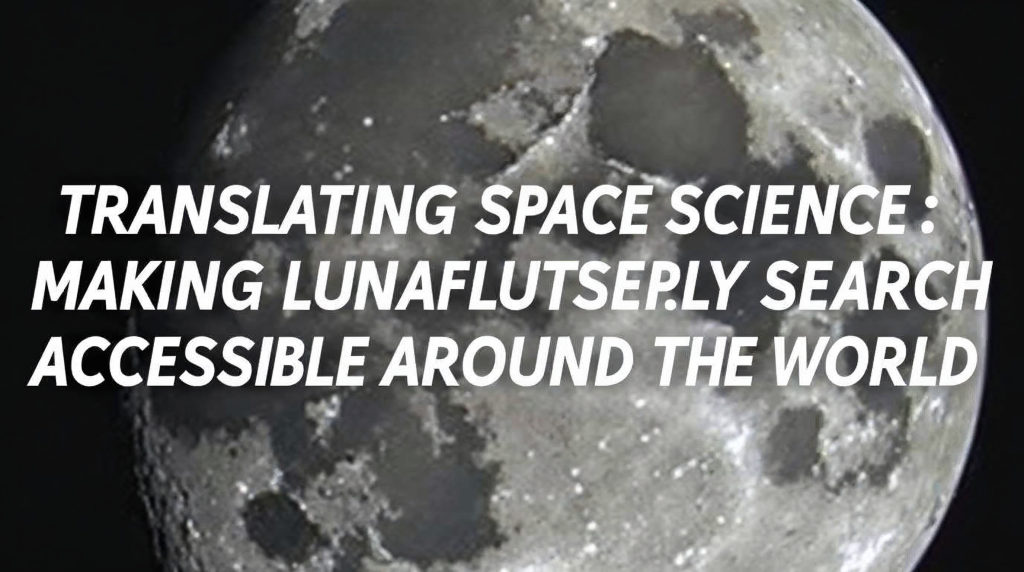
Humanity’s return to the Moon has sparked a new era of scientific discovery. Governments, private companies, universities, and international research teams are producing an unprecedented volume of lunar data, technical reports, mission updates, and scientific publications. As these discoveries expand, ensuring that knowledge is available to researchers, policymakers, educators, and the public across different languages has become increasingly important.
For space research organizations and scientific publishers, multilingual communication is no longer simply a supporting function. It is an essential part of global collaboration, knowledge sharing, and scientific progress. High-quality language adaptation helps remove barriers, encourages international partnerships, and allows valuable lunar research to reach audiences worldwide.
H2: Making Lunar Science Truly Global Through Translation
Lunar research is expanding across countries, but language remains a hidden barrier in sharing discoveries. While missions like Artemis, Chandrayaan, and Chang’e generate vast scientific data, much of it is first published in highly technical English, Russian, Chinese, or Japanese formats. This can delay understanding for researchers in other regions who depend on accurate comprehension for their own studies.
Modern space science is now using multilingual annotation systems that attach translations directly to datasets, images, and mission reports without altering the original research. This helps preserve scientific accuracy while improving accessibility.
A growing trend is concept-based translation, where meaning is adapted for fields like geology or planetary science instead of word-by-word conversion. This ensures lunar findings are correctly understood across disciplines.
Even mission communication is evolving with real-time translation tools for international teams working on lunar operations. As space exploration becomes more global, translation is no longer just support—it is essential infrastructure connecting humanity to the Moon.
The Growing Importance of Lunar Research
Lunar exploration has entered a period of rapid advancement. National space agencies and commercial organizations are launching missions focused on understanding the Moon’s geology, resources, environment, and potential for long-term human presence.
Major initiatives include:
- NASA’s Artemis program
- ESA’s lunar exploration projects
- ISRO’s Chandrayaan missions
- JAXA’s lunar research initiatives
- CNSA’s Chang’e missions
- Private lunar lander programs
Each mission generates enormous amounts of scientific content, including:
- Research papers
- Technical documentation
- Engineering specifications
- Mission reports
- Educational resources
- Press releases
- Conference presentations
- Data summaries
This information serves audiences from multiple countries, making multilingual accessibility a critical priority.
Why Global Accessibility Matters
Scientific discoveries achieve their greatest value when they can be understood and used by the international research community.
Researchers in different regions contribute unique expertise in fields such as:
- Planetary geology
- Remote sensing
- Materials science
- Robotics
- Space medicine
- Artificial intelligence
- Communications engineering
When language barriers limit access to findings, opportunities for collaboration may be reduced. Providing scientific materials in multiple languages helps researchers build upon existing knowledge rather than repeating previous work.
Greater accessibility also strengthens educational programs, encourages student participation, and supports public understanding of space exploration.
Supporting International Scientific Collaboration
Modern lunar missions rarely involve a single organization working independently.
Many projects include:
- Government agencies
- Universities
- Research institutes
- Commercial aerospace companies
- International laboratories
- Equipment manufacturers
These partnerships depend on accurate communication throughout every phase of development.
Documentation often includes:
- Mission planning
- Engineering requirements
- Safety procedures
- Research methodologies
- Instrument specifications
- Scientific findings
Clear multilingual documentation allows participating organizations to coordinate more effectively and maintain consistent understanding across teams.
Scientific Publishing in a Global Environment
Scientific publishers play a central role in sharing lunar research with the international community.
Academic journals, conference proceedings, technical publications, and institutional repositories distribute new discoveries to researchers across the world.
Expanding accessibility through multiple languages helps publishers:
- Reach broader audiences
- Increase research visibility
- Encourage international citations
- Support global collaboration
- Promote educational use
As lunar exploration accelerates, multilingual publishing strategies are becoming an increasingly valuable investment.
Challenges of Space Science Communication
Space science presents unique communication challenges because it combines several highly specialized disciplines.
A single research paper may include concepts from:
- Physics
- Astronomy
- Chemistry
- Engineering
- Computer science
- Mathematics
- Planetary science
Specialized terminology must remain technically consistent while also remaining understandable for the intended audience.
Many documents include:
- Complex measurements
- Scientific notation
- Technical diagrams
- Mission timelines
- Engineering processes
- Instrument calibration details
Every element requires careful handling to preserve scientific accuracy.
Maintaining Scientific Accuracy
Precision is essential in space research.
Even small wording differences may alter the meaning of:
- Experimental procedures
- Engineering specifications
- Safety requirements
- Data analysis methods
- Research conclusions
For this reason, organizations often rely on subject matter specialists who understand both scientific terminology and the context of lunar exploration.
Quality assurance processes frequently include multiple rounds of technical review before publication.
Making Complex Research Easier to Understand
While technical documentation serves researchers, public outreach materials require a different approach.
Space agencies regularly publish:
- Educational articles
- Museum exhibits
- School resources
- News updates
- Mission summaries
- Public engagement campaigns
These materials help explain complicated scientific concepts in language that broader audiences can understand without reducing factual accuracy.
This approach encourages greater public interest in space science while supporting science education worldwide.
The Role of Digital Publishing
Digital platforms have transformed how scientific information is distributed.
Research organizations now publish materials through:
- Online journals
- Institutional repositories
- Mission websites
- Educational portals
- Digital libraries
These platforms allow new findings to reach global audiences much faster than traditional print publishing.
They also support multimedia content, including diagrams, animations, interactive graphics, and downloadable datasets that enhance understanding.
Reaching Emerging Space Nations
Interest in lunar exploration extends far beyond established space programs.
Many emerging space nations are investing in:
- University research
- Satellite technology
- Planetary science education
- International partnerships
- Space engineering programs
Providing accessible scientific resources supports these growing communities and encourages broader participation in lunar research.
Inclusive knowledge sharing strengthens the worldwide scientific ecosystem and creates opportunities for future collaboration.
Encouraging Educational Growth
Universities and research institutions depend on reliable scientific resources for teaching future scientists and engineers.
Accessible educational materials help students explore topics such as:
- Lunar geology
- Orbital mechanics
- Spacecraft engineering
- Surface exploration
- Planetary environments
- Remote sensing technologies
Students who can study current research in their preferred language often gain a stronger understanding of complex scientific concepts and are better prepared for careers in aerospace and planetary science.
Supporting Public Engagement
Public support has always played an important role in space exploration.
People are naturally curious about:
- Moon missions
- Human exploration
- Scientific discoveries
- Future lunar habitats
- Space technology
Providing clear and accessible information allows broader audiences to appreciate the value of ongoing research.
Educational outreach also inspires younger generations to pursue careers in science, technology, engineering, and mathematics.
Best Practices for Space Research Organizations
Organizations seeking to improve multilingual accessibility should establish clear communication strategies.
Effective practices include:
Develop Standard Terminology
Maintain approved scientific glossaries that ensure consistency across publications, reports, and educational materials.
Work with Subject Experts
Collaborate with professionals who understand aerospace terminology and scientific publishing standards.
Apply Rigorous Quality Review
Technical experts should review documents before publication to confirm scientific consistency and accuracy.
Update Existing Resources
As missions evolve, previously published materials should be reviewed and revised to reflect current findings and terminology.
Consider Cultural Context
Educational materials should be appropriate for diverse audiences while preserving scientific meaning.
Best Practices for Scientific Publishers
Scientific publishers can strengthen global accessibility by adopting structured multilingual publishing workflows.
Key recommendations include:
- Build terminology databases for recurring scientific concepts.
- Establish editorial review procedures for technical content.
- Encourage collaboration between editors and subject specialists.
- Use standardized formatting across different language editions.
- Maintain version control for updated research publications.
- Ensure figures, tables, and references remain consistent.
These practices improve reliability while reducing inconsistencies across publications.
Emerging Technologies Supporting Scientific Communication
Advances in language technology are helping organizations manage growing volumes of scientific content.
Modern solutions can assist with:
- Terminology management
- Document consistency
- Workflow automation
- Content organization
- Publication management
However, specialized scientific materials continue to benefit from careful expert review, particularly when dealing with complex aerospace concepts where precision is essential.
Technology is most effective when combined with experienced scientific professionals and strong editorial processes.
Looking Ahead
The coming decades promise unprecedented growth in lunar exploration.
Future missions may involve:
- Permanent research facilities
- Advanced robotic exploration
- Resource utilization studies
- International lunar infrastructure
- Expanded scientific cooperation
As these initiatives generate larger collections of research, multilingual accessibility will become even more important.
Organizations that invest in high-quality scientific communication today will be better positioned to support tomorrow’s discoveries and strengthen global collaboration.
Conclusion
Lunar exploration represents one of humanity’s most ambitious scientific endeavors, bringing together researchers, engineers, educators, and institutions from around the world. Making this growing body of knowledge accessible across multiple languages supports stronger collaboration, wider educational opportunities, and greater public engagement.
For space research organizations and scientific publishers, multilingual communication is more than an operational requirement. It is a strategic investment that expands the reach of scientific discoveries, encourages international partnerships, and helps ensure that valuable lunar research benefits the global scientific community. As new missions continue to unlock the Moon’s secrets, accessible scientific communication will remain a cornerstone of shared progress and innovation.