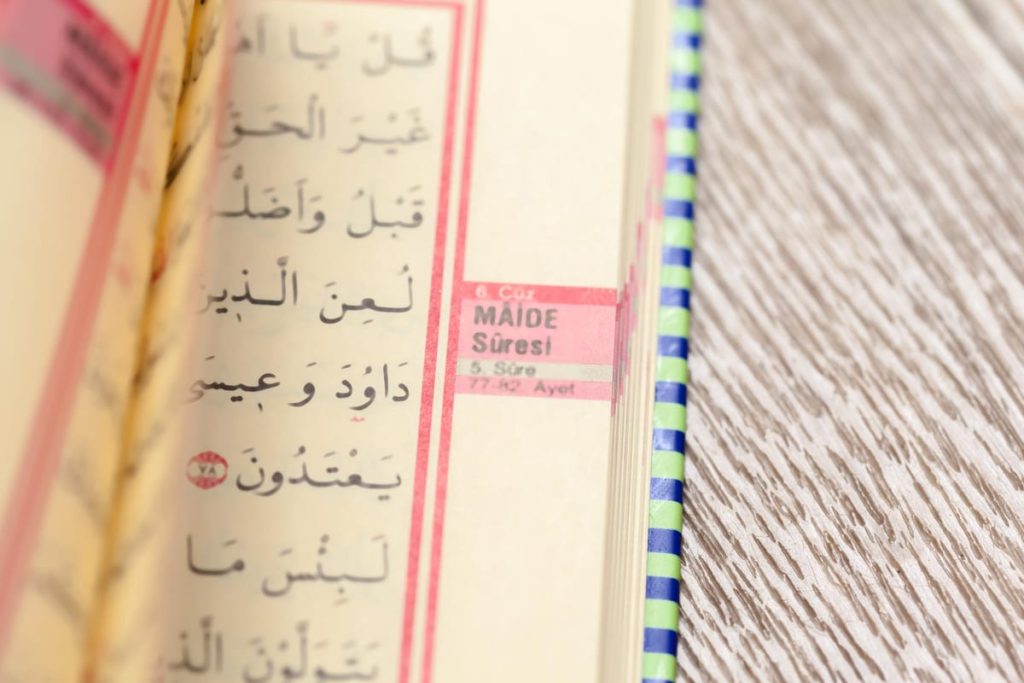

A customer called on a Thursday afternoon in March with three short pages from a book, written in Arabic, that he needed in certified English for legal purposes. There was very little text on them, which made the quote simple and the layout complicated. The translation was delivered inside the promised window the next day. Then he asked for something the order sheet had never mentioned: each translated page paired with the original image it came from. Our team rebuilt the file twice that afternoon, and the final version still went out before the deadline.
Key Takeaways
- Say up front how the finished file needs to look, not just what it needs to say.
- Page count comes from word count, so three sparse pages may not be three pages of work.
- Putting a source image on the same page as its translation means resizing that image.
- A question before a redo is faster than two redos; confirm scope before reformatting.
- Formatting revisions after delivery are part of the job, not a new order.
The Situation
The first contact was a phone call. The customer asked whether we handled certified Arabic to English work, then described what he had: three pages from a book carrying, in his words, “very minimal minimum information.” Explore our arabic translation new york services for details.
Our consultant explained how page count works. Three pages would normally be assumed to run about 750 words, a two to three business day job. When the customer said the text ran to a hundred words at most, the estimate changed on the spot: at that volume it falls as a one-page document, deliverable in one business day. He asked whether he could hand the pages across in person, and was told there was no need, since a clear photo would do. He sent the images while still on the call.
Our file team reviewed them within minutes and logged what mattered for Arabic translation in New York: one page graded Good quality, two logged as reverse sides, each carrying the same note, “Few hand written parts are there.”
How We Handled It
Counting words, not sheets
The quote confirmed what the call had settled: one page of work split across the three images, Arabic to English, on a standard turnaround of one to two business days. He paid within twenty minutes, and our team committed in writing to emailing the certified translation on March 27 by 5:00 PM EST.
The first delivery, and a request nobody had made yet
The translations went out at about 1:37 PM the next day, three PDFs plus the certificate of translation, well inside the window. Twelve minutes later he replied that he had verified them and they “seems to be spot on,” then asked the real question: could each translated page be paired with the actual image he had shared, for legal purposes?
That is a formatting request, not a translation complaint, and it arrived after the file was finished. Our consultant acknowledged it within the half hour and sent the job back to merge each page with its source image. The revised set was delivered at about 2:38 PM, about fifty minutes after he asked.
One question before the second redo
He came back with a screenshot of the layout he had in mind, but it did not show what he was describing: the reference did not include the source image placed beneath the translation on the same page.
Rather than guess, our consultant asked two things. Did he want the image underneath the translation on that one page only, or on all three? And he flagged the trade-off: putting both on a single page would require resizing the image, which may affect its legibility. The customer asked for the image to be made smaller so it would fit, adding that “it is a reference only, and the main subject is the translation.”
Smaller images, same page, same deadline
With the scope confirmed, the team formatted the source images to fit on the same page as their translations. The third and final version went out at about 4:10 PM, ahead of the 5:00 PM commitment made at payment. Three deliveries, two reformats, one working day.
The Result
Three certified translated pages, each sharing a page with a resized image of the Arabic original, delivered inside the promised window. He wrote back within the half hour: “You guys are amazing, I am the one to thank you for your patience, and accommodating my request.”
Why Layout Matters When a Translation Goes Into a File
A translation is read next to the thing it translates. Someone reviewing a file wants the Arabic and the English without flipping between two documents, and a reader who does not know the source language still needs to see that a real page sat behind the English.
That is why layout requests are worth making early. Merging a source image with its translation is routine work, but it changes the page: the image has to be scaled, the text reflowed and the pagination checked. If the receiving office expects the original and the translation together, say so when you order and our document formatting team can build it that way from the start.
What a Certified Translation of a Book Excerpt Includes
- The full text of each page supplied, translated by a human translator
- Handwritten annotations on those pages, translated rather than skipped
- A signed certificate of translation covering the pages delivered
- A note marking anything illegible instead of a guess
- The layout you asked for, once you have told us what it is
Handwriting deserves a note. All three images here carried handwritten portions, and in Arabic letter shapes change with position, so an unpointed word can support more than one reading. Our practice is to ask rather than assume, and a sharp photo of the handwritten section helps more than anything else.
A certified translation covers the pages you send, not the book they came from. If an office later asks for a title page or a full chapter, that is a new set of pages, and for longer projects our book translation team works from the complete text.
Asking for a Format Change After Delivery
- Send a screenshot or sketch of what you want, and check it actually shows the change.
- Say whether it applies to one page or to every page in the set.
- Name the constraint behind the request, such as filing the original alongside the English.
- Expect a trade-off question; fitting two things on one page usually means shrinking one.
- Raise it promptly. Revisions are free for 30 days, and corrections usually return in 24 to 48 hours.
Arabic Translation Across the New York Area
Arabic-speaking communities are spread across the metropolitan area, from Bay Ridge and Astoria to Paterson and out along Long Island, and the documents that reach us reflect that range: civil records, court papers, contracts, medical reports, school records and pages from books and family papers.
Almost everything can be handled online, as it was here, with photos in and PDFs back the same or next business day. If you would rather come in, our office is at 224 W 35th St #1200-8, New York, NY 10001, between Seventh and Eighth Avenues, a short walk from Penn Station, Herald Square and Port Authority. See our New York translation services, or read how a French transcript was handled for a Midtown walk-in.
Frequently Asked Questions
Can you put the original document and the translation on the same page?
Yes. Translated text can be delivered with the source image merged onto the same page, beneath the translation or beside it. Placing both on one page normally means resizing the image, which can affect how legible it is. In this story the customer chose a smaller image because, as he put it, the source was a reference and the translation the main subject.
How is page count worked out for pages with very little text?
By word count, not by the number of sheets. A page is counted at roughly 250 words, so three sparse pages from a book can amount to about one page of work. In this story three images carried at most a hundred words between them, and the quote reflected that.
Can handwritten Arabic be translated?
Yes, with extra care. Arabic letter shapes change with position, and an unpointed handwritten word can support more than one reading, so a translator who is not certain raises the entry instead of guessing. All three pages in this story carried handwritten portions, and unclear words are confirmed with you before delivery.
How quickly can short Arabic pages be translated?
A small set of sparse pages is often a one business day job, which is what was quoted here. Same-day delivery is available for single-page certificates and rush delivery within 2–24 hours can be arranged. Tell us your deadline so it is confirmed in your quote.
Are formatting revisions charged separately?
Reformatting the file we delivered is part of the job. In this story the layout was rebuilt twice on the day of delivery, first to merge each translation with its source image and then to resize those images, and the final version still landed before the promised time.
Do I need to bring my documents to your office?
No. Clear photos taken on a phone are enough for most documents, and the whole order can run by email. The customer in this story asked on the call whether he should hand the pages over in person and was told he did not need to. Hard copies can be collected at our Midtown office by arrangement.
Have Arabic Pages That Need Translating?
Send clear photos of every page, front and back, and tell us how the finished file needs to look as well as what it needs to say. If the original has to sit with the translation, say so up front. Get a free quote or call 1-800-230-7918. Vanan Services has served customers since 2009 and is rated 4.9 stars from 970+ Google reviews.
This story is based on a real Vanan Services order. Names, dates and other identifying details have been removed to protect our customer’s privacy.