
Key Takeaways
- Captions are essential for NYC businesses—improving accessibility, viewer retention, SEO, and enabling communication across the city's diverse, multilingual audiences.
- AI captioning uses ASR, NLP, and machine learning to produce instant, low-cost, and highly scalable captions, making it useful for live events, daily social posts, and as a draft for later editing.
- AI captioning has accuracy limitations in real-world NYC scenarios: difficulty with accents, dialects, fast speech, background noise, industry-specific vocabulary, speaker identification, and caption formatting.
- Human captioning offers much higher accuracy (typically 99%+), better contextual understanding, correct speaker labeling, stronger multilingual support, and improved legal/accessibility compliance for regulated or high-stakes content.
- Choose AI when speed, cost, and volume are priorities or for draft captions; choose professional human captioning when accuracy, compliance, technical terminology, or audience comprehension are critical.
In a city as fast and diverse as New York, clear communication matters more than ever. From company webinars in Manhattan to marketing campaigns in many languages in Queens, businesses rely on video to reach staff, customers and audiences. But one question keeps puzzling digital marketers, HR teams and media managers:
Should businesses rely on AI captioning or human captioning for accuracy?
Video is now central to branding, compliance, staff training and customer engagement, so captions are no longer optional. They improve access, keep viewers watching, help SEO and help businesses reach the many languages spoken across New York City. For the best results, professional captioning services in New York can make a big difference.
But not all caption methods deliver the same quality.
This guide looks at how AI captioning and human captioning differ. It compares their accuracy and helps NYC businesses choose the best option for their needs.
Understanding AI Captioning
AI captioning uses speech recognition and machine learning to turn spoken audio into text on its own. YouTube, Zoom, Microsoft Teams and many video editing tools now offer auto captions.
The software studies audio patterns, picks out words and creates captions in seconds.
How AI Captioning Works
AI caption systems rely on:
- Automatic Speech Recognition (ASR)
- Natural Language Processing (NLP)
- Machine learning models
- Audio pattern recognition
The software keeps learning from speech samples and gets better over time. Many AI systems can also add punctuation, spot pauses and apply basic formatting.
Advantages of AI Captioning
Fast Turnaround Time
AI captions appear almost instantly. Businesses with lots of video often like the speed.
For example:
- Daily social media posts
- Internal company meetings
- Quick webinar uploads
- Short event recaps
Lower Initial Costs
AI caption tools usually cost less than professional human captioning. Subscription tools make auto captions easy for startups and small businesses to use.
Scalable for High Volume Content
NYC media firms and digital agencies often make dozens of videos a week. AI tools help them handle large volumes.
Useful for Draft Captions
Many businesses use AI captions as a first draft and then edit them by hand.
The Challenges of AI Captioning Accuracy
AI has improved fast, but auto captions still struggle in many real business settings common in New York City.
Difficulty Understanding Accents and Dialects
NYC is one of the most diverse cities in the world for languages. Staff, customers and speakers may have:
- International accents
- Regional dialects
- Fast speech
- Industry-specific pronunciation
AI systems often misread these speech differences.
For example:
- Finance terms on Wall Street
- Health terms in medical training videos
- Legal talk in compliance seminars
- Multilingual conversations
Even advanced AI systems can make errors that change the meaning of the content.
Background Noise Issues
New York settings are rarely quiet.
AI caption tools may struggle with:
- Street noise
- Restaurant ambiance
- Office chatter
- Crowd noise at events
- Echoes in conference recordings
These sounds greatly lower caption accuracy.
Problems with Industry-Specific Vocabulary
Businesses in fields such as:
- Finance
- Legal services
- Healthcare
- Media production
- Technology
often use special terms. AI software may misread technical terms, short forms or brand names.
Poor Speaker Identification
In meetings, interviews or panel talks, AI tools may fail to identify:
- Multiple speakers
- Overlapping conversations
- Tone changes
- Emotional context
This is a problem for training videos, HR records and media interviews.
Caption Formatting Limitations
AI captions often lack:
- Proper punctuation
- Correct timing
- Speaker labels
- Contextual formatting
- Readability optimization
Poor formatting can annoy viewers and lower engagement.
What Is Human Captioning?
Human captioning uses trained professionals who type and time captions for video by hand.
Professional captioners listen closely, read the context and make sure captions match what was said. Professional captioning services bring the skill needed for accurate results.
Unlike AI systems, human captioners understand:
- Tone
- Context
- Slang
- Industry language
- Cultural references
- Speaker intent
Advantages of Human Captioning for NYC Businesses
Higher Accuracy Rates
Human captioning services usually reach 99+% accuracy.
This level of precision matters for:
- Company training videos
- Legal recordings
- Financial presentations
- Marketing campaigns
- Medical training content
Accurate captions protect your brand and reduce misunderstandings.
Better Understanding of Context
People can tell similar-sounding words apart by using context.
For example:
- “their” vs “there”
- “compliance” vs “appliance”
- Brand names and technical terms
This awareness of context is very useful for NYC businesses in specialized fields.
Improved Accessibility Compliance
Many NYC groups must follow access rules, including:
- ADA requirements
- Section 508 standards
- FCC caption rules
Human captioning helps with compliance by delivering:
- Proper synchronization
- Correct speaker labels
- All key audio, including sounds
Poor captions can create legal risk and access barriers. Knowing why captioning for accessibility matters helps businesses make good choices.
Better Multilingual Support
New York businesses often make content for audiences who speak many languages.
Human captioners can accurately handle:
- Foreign words
- Code-switching
- Bilingual conversations
- Cultural nuances
AI tools often struggle when several languages are used.
Enhanced Viewer Experience
Well-crafted captions improve:
- Audience retention
- Video engagement
- Learning outcomes
- Brand professionalism
For HR and training teams, accurate captions directly affect how well staff understand and settle in.
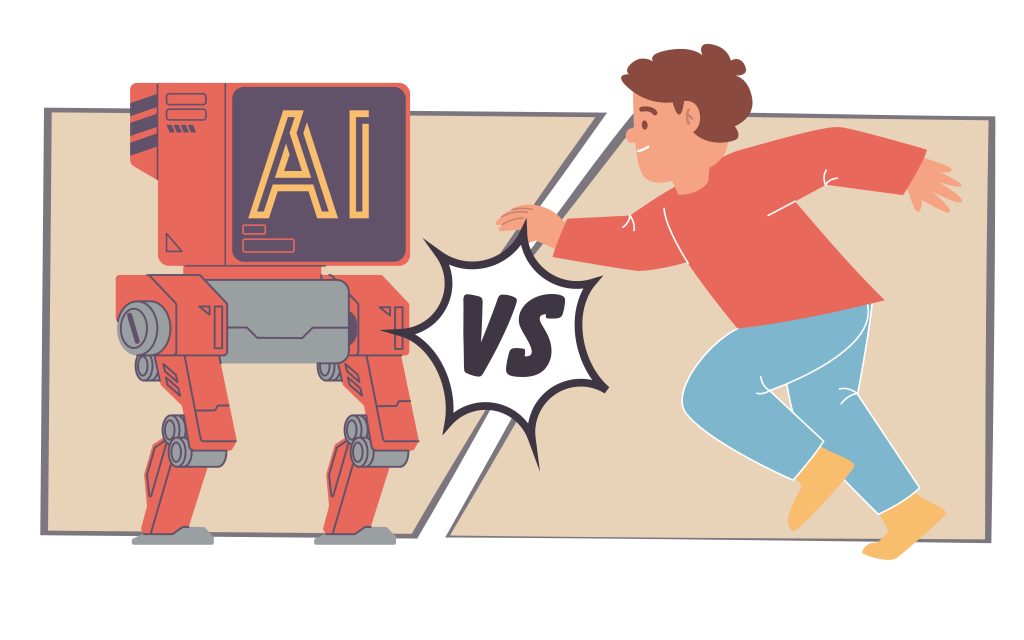
Comparing AI Captioning vs Human Captioning
Accuracy
Human captioning beats AI captioning again and again in complex business settings. The same is true when people compare AI and human transcription.
AI caption accuracy may range from:
- 75% to 90% in ideal conditions
Human captioning usually reaches:
- 99%+ accuracy
The gap grows when you deal with:
- Fast speech
- Technical terminology
- Multiple speakers
- Noisy recordings
Speed
AI captioning wins on speed.
Auto tools can create captions in minutes. Human captioning takes longer, depending on video length and complexity.
But businesses often spend extra time fixing AI errors.
Cost
AI captioning usually costs less up front.
But poor captions can bring hidden costs through:
- Brand damage
- Miscommunication
Frequently Asked Questions
Is AI captioning or human captioning more accurate?
Human captioning is usually more accurate, especially with accents, background noise, many speakers and industry terms. AI captioning can work fairly well on clear audio with one speaker. But it often gets names, numbers and special terms wrong, and human captioners catch those errors.
When might AI captioning be enough for a business?
AI captions may be fine for quick internal videos, casual social clips and drafts where small errors will not cause problems. Review them before you publish. For customer, training, legal or access-sensitive videos, human captioning is the safer and more professional choice.
Why does caption accuracy matter for accessibility compliance?
Viewers who are deaf or hard of hearing rely on captions to understand content. Captions with errors may not give equal access, which matters for access rules and policies. Accurate, well-timed human captions help businesses meet those rules with confidence.
Do human captioners handle multilingual content better?
Yes. Human captioners and subtitle translators understand context, cultural references and what speakers mean. They handle mixed languages more reliably. This matters in a diverse city like New York, where videos often include speakers with many accents and languages.
How much does human captioning cost?
Human captioning at Vanan Services starts at $1.00 per minute for English and $7.00 per minute for other languages. Burned-in captions cost $5.00 per minute. Standard turnaround is 2 to 3 business days. Rush delivery within 2 to 24 hours is available for an extra 50%.