
Key Takeaways
- Professional translation is a strategic priority for zoos, aquariums, museums, and attractions — it enhances accessibility, inclusivity, visitor satisfaction, global reach, and mission fulfillment.
- Translation matters across core areas: exhibit and animal information labels, visitor maps and wayfinding, brochures/activity sheets/trail guides, digital platforms (websites, apps, emails), educational materials/lesson plans, and marketing/promotional campaigns.
- Typical translation workflow: assess source material, select target languages based on visitor data, perform linguistic adaptation with subject‑matter expertise, conduct rigorous quality assurance and review, then deliver print‑ready and digital assets for integration.
- Best practices for attractions: start translation early in planning, maintain a style guide and glossary, update content regularly, use analytics to prioritize languages, and partner with providers experienced in cultural/educational content and scientific terminology.
- Measured benefits of multilingual communication include increased international visitation, higher engagement and satisfaction, improved educational outcomes, and greater staff efficiency due to fewer routine language‑related queries.
In an increasingly connected world, cultural diversity among visitors to zoos, aquariums, and museums is greater than ever. Guests arrive with different languages, cultural backgrounds, and expectations — and organizations that embrace accessibility and inclusivity have a meaningful advantage. For attractions that care deeply about both education and engagement, professional translation services are no longer an afterthought — they are a strategic priority that directly contributes to visitor satisfaction, global reach, and mission fulfillment.
This comprehensive guide explores the many ways specialized translation supports animal facts, wayfinding materials, educational resources, marketing collateral, and internal operations across facilities. Whether you’re planning multilingual signage, digital guides, or outreach campaigns, understanding how translation enhances accessibility and visitor experience can shape better outcomes for your team and your audience.
Beyond Exhibits: Why Translation Matters During National Zoo and Aquarium Month
National Zoo and Aquarium Month is more than a celebration of wildlife. It is also a reminder that conservation education should be accessible to every visitor, no matter what language they speak. Zoos and aquariums welcome families, tourists, students, researchers, and international guests every day. When information is available only in one language, many visitors miss the deeper story behind each animal, habitat, and conservation effort.
Translation services help turn a simple visit into a meaningful learning experience.
Why Multilingual Communication Matters for Attractions
At the heart of every zoo, aquarium, or museum is a story. Whether it’s the evolution of a coral reef, the migratory patterns of snow leopards, or the craftsmanship of ancient civilizations, these narratives captivate visitors of all ages. But when language barriers exist, these stories can become inaccessible.
Multilingual communication does three key things:
- Improves AccessibilityEvery visitor should feel welcome and empowered to engage with exhibits. Clear, accurate translation ensures non‑native speakers access essential information — from animal behavior and conservation messages to safety instructions and navigation.
- Expands Your ReachVisitors travel from around the globe. By offering resources in multiple languages, attractions can attract broader audiences and build stronger reputations as inclusive destinations.
- Strengthens Educational ImpactWhen learners understand core messages in their preferred language, retention and engagement increase. For organizations committed to education and conservation, this deepens impact and fosters meaningful connections.
Core Areas Where Translation Makes a Difference
Let’s explore how translation applies to daily operations and strategic visitor‑experience goals for zoos, aquariums, and similar attractions.
1. Exhibit and Animal Information Labels
Visitors love learning interesting facts about animals and exhibits — from a giraffe’s unique tongue length to a sea turtle’s migration path. These labels often include scientific names, behavior descriptions, dietary habits, and habitat details.
Accurate translation ensures that:
- Complex terminology becomes accessible
- Cultural contexts are respected
- Educational goals are upheld without dilution
- Language nuances don’t distort scientific meaning
Well‑translated exhibit labels help every guest feel included and deepen their engagement with the content.
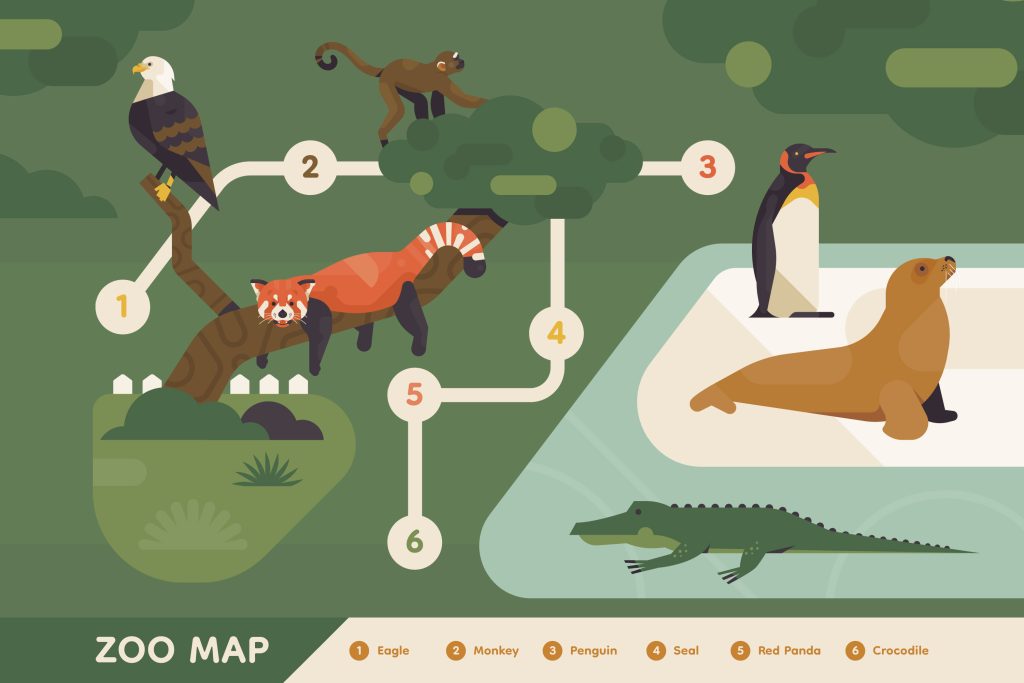
2. Visitor Maps and Wayfinding Materials
Navigating a large attraction can be overwhelming, particularly when visitors are unfamiliar with local geography or language. Clear, translated visitor maps and directional signage play a pivotal role in orientation and comfort.
Professional translation helps you:
- Localize directional cues (e.g., restrooms, food courts, viewing platforms)
- Adapt spatial references for cultural clarity
- Ensure consistency between printed and digital materials
- Reduce visitor confusion and staff redirection time
Good translation turns a map into a tool that effortlessly guides guests through your space.
3. Brochures, Activity Sheets, and Trail Guides
Whether it’s a seasonal brochure, an educational trail, or a scavenger hunt activity sheet for kids, multilingual materials amplify the quality of engagement.
These resources may include:
- Lists of featured species
- Interactive questions for families
- Conservation talking points
- Details on daily demonstrations or feedings
Translations tailored to your visitor demographics make attractions more welcoming and enhance learning retention — especially for young explorers and international families.
4. Digital Platforms: Websites, Apps, and Emails
A visitor’s journey often begins before they even arrive — with a website visit or mobile research. Translating key digital platforms ensures that potential guests can:
- Check opening hours
- Purchase tickets
- Learn about exhibits
- Read accessibility guidelines
- Plan their visit confidently
In email campaigns, multilingual messaging promotes upcoming events, fundraisers, membership opportunities, and stewardship initiatives with greater clarity and impact.
5. Educational Materials and Lesson Plans
Many zoos and aquariums partner with schools or host field trips, offering supplemental educational content for teachers and students. Translation expands the reach of these programs and supports educators in multilingual classrooms.
Whether printed as handouts or distributed online, materials might include:
- Curriculum‑aligned lesson plans
- Conservation activity ideas
- Take‑home information for families
Well‑translated educational content reflects your commitment to inclusive learning and community engagement.
6. Marketing and Promotional Campaigns
Your promotional messages deserve to be heard far and wide. Translation strengthens your marketing assets — from posters and social media graphics to newsletters and press releases.
Benefits include:
- Higher engagement from international visitors
- Better resonance with culturally diverse local communities
- Consistent brand voice across languages
- Expanded visibility in global tourism markets
With thoughtful translation, your attraction’s voice reaches deeper and wider while remaining respectful and accurate.
How Translation Services Work for Attractions
Understanding translation workflows can help you integrate them smoothly into your planning process.
Step 1: Source Material Assessment
A professional provider begins by reviewing your existing content — identifying terminology, style, and context relevant to your institution. For parks, cultural attractions, and educational exhibits, this step is crucial to maintaining tone and precision.
Step 2: Language Selection Based on Audience Insights
Rather than guessing which languages to prioritize, many organizations use visitor data to guide decisions. Popular languages often include Spanish, Mandarin, French, Hindi, Arabic, and Japanese — but the right mix depends on your region and visitor trends.
Step 3: Linguistic Adaptation
Translation isn’t just word‑for‑word conversion; it’s about adapting meaning and context. Experienced linguists with subject‑matter expertise will:
- Choose vocabulary that aligns with scientific and educational standards
- Respect cultural nuances and sensitivities
- Ensure terminology remains consistent across materials
This step results in translations that are accurate, engaging, and culturally appropriate.
Step 4: Quality Assurance and Review
Before publication, translated content undergoes rigorous checks — typically including:
- Editing by second linguists
- Proofreading for grammar and context
- Alignment with brand voice
- Verification of technical terms
Quality assurance ensures that every piece of content reflects your standards and mission.
Step 5: Delivery and Integration
Finalized content is delivered in formats ready for implementation, such as:
- Print‑ready files for signage and brochures
- Text files or spreadsheets for websites and apps
- Localized assets for digital campaigns
A smooth handoff means faster deployment and consistent visitor experiences.
Best Practices for Attractions Seeking Translation Support
Engaging translation services effectively requires thoughtful preparation. Here are some tips to help your team succeed:
● Start Early in Your Planning Process
Allow adequate lead time for translation, especially for seasonal campaigns or exhibit launches. Early integration avoids rushed work and ensures quality.
● Maintain a Style Guide
A style guide includes preferred terminology, tone preferences, and glossary elements. This guide helps linguists produce consistent translations across projects.
● Update Content Regularly
Attractions evolve — with new exhibits, programs, and initiatives. Regularly revisiting translated materials keeps everything current and relevant.
● Use Analytics to Inform Language Priorities
Visitor data and feedback can help you prioritize languages that best serve your audience. Insights from web traffic, ticketing reports, and guest surveys can guide decisions.
● Partner With Knowledgeable Providers
Choose providers experienced with cultural attractions, educational content, and scientific terminology. Their expertise streamlines workflows and enhances accuracy.
Impact Stories: What Translation Can Achieve
Organizations that embrace multilingual communication often see measurable benefits:
- Increased international visitationVisitors who feel welcomed in their language are more likely to choose an attraction and recommend it to others.
- Stronger engagement and satisfaction scoresClear, accessible content improves overall experiences and encourages repeat visits.
- Enhanced educational outcomesTeachers and families report higher learning satisfaction when materials are presented in visitors’ preferred languages.
- Better staff efficiencyWhen information is clearly available in multiple languages, frontline teams spend less time answering common questions and more time creating memorable experiences.
Final Thoughts
Zoos, aquariums, museums, and cultural attractions are more than places to see animals or artifacts — they are spaces where curiosity comes alive. Thoughtful translation amplifies the value of every exhibit, program, and message you share.
By investing in quality translation, your team fosters inclusivity, improves engagement, and champions global understanding in meaningful ways. Whether it’s clarifying animal facts, guiding visitors through your grounds, sharing conservation goals, or inviting guests to participate in special events — every translated word builds connection.
Embrace translation not just as a service, but as a bridge — one that invites everyone into your world and inspires lifelong learning.