
Key Takeaways
- Captions are essential for NYC businesses—improving accessibility, viewer retention, SEO, and enabling communication across the city's diverse, multilingual audiences.
- AI captioning uses ASR, NLP, and machine learning to produce instant, low-cost, and highly scalable captions, making it useful for live events, daily social posts, and as a draft for later editing.
- AI captioning has accuracy limitations in real-world NYC scenarios: difficulty with accents, dialects, fast speech, background noise, industry-specific vocabulary, speaker identification, and caption formatting.
- Human captioning offers much higher accuracy (typically 99%+), better contextual understanding, correct speaker labeling, stronger multilingual support, and improved legal/accessibility compliance for regulated or high-stakes content.
- Choose AI when speed, cost, and volume are priorities or for draft captions; choose professional human captioning when accuracy, compliance, technical terminology, or audience comprehension are critical.
In a city as fast-paced and diverse as New York, communication matters more than ever. From corporate webinars in Manhattan to multilingual marketing campaigns in Queens, businesses rely heavily on video content to connect with employees, customers, and audiences. But one question continues to challenge digital marketers, HR departments, and media managers alike:
Should businesses rely on AI captioning or human captioning for accuracy?
As video content becomes central to branding, compliance, employee training, and customer engagement, captions are no longer optional. They improve accessibility, enhance viewer retention, support SEO, and help businesses reach multilingual audiences across New York City’s diverse population. For organizations seeking the highest quality results, working with professional captioning services new york services can make a significant difference.
However, not all captioning methods deliver the same level of quality.
This guide explores the differences between AI captioning and human captioning, compares their accuracy, and helps NYC businesses determine which option best suits their needs.
Understanding AI Captioning
AI captioning uses speech recognition technology and machine learning algorithms to automatically convert spoken audio into text. Platforms like YouTube, Zoom, Microsoft Teams, and many video editing tools now offer automated captions.
The process works by analyzing audio patterns, identifying words, and generating captions within seconds.
How AI Captioning Works
AI captioning systems rely on:
- Automatic Speech Recognition (ASR)
- Natural Language Processing (NLP)
- Machine learning models
- Audio pattern recognition
The software continuously learns from speech samples and improves over time. Many AI systems can also recognize punctuation, speaker pauses, and basic formatting.
Advantages of AI Captioning
Fast Turnaround Time
AI-generated captions are produced almost instantly. Businesses handling large amounts of video content often appreciate the speed.
For example:
- Daily social media uploads
- Internal corporate meetings
- Quick webinar publishing
- Live streaming events
Lower Initial Costs
AI captioning tools are generally more affordable than professional human captioning services. Subscription-based platforms make automated captions accessible for startups and small businesses.
Scalable for High Volume Content
Media companies and digital marketing agencies in NYC frequently produce dozens of videos weekly. AI tools help process large content volumes efficiently.
Useful for Draft Captions
Many businesses use AI-generated captions as a starting point before editing them manually.
The Challenges of AI Captioning Accuracy
Despite rapid improvements in AI technology, automated captioning still struggles with several real-world business scenarios common in New York City.
Difficulty Understanding Accents and Dialects
NYC is one of the most linguistically diverse cities in the world. Employees, customers, and speakers may have:
- International accents
- Regional dialects
- Fast-paced speech patterns
- Industry-specific pronunciation
AI systems often misinterpret these speech variations.
For example:
- Financial terminology on Wall Street
- Healthcare terminology in medical training videos
- Legal discussions during compliance seminars
- Multilingual conversations
Even advanced AI systems can generate errors that change the meaning of content.
Background Noise Issues
New York environments are rarely quiet.
AI captioning tools may struggle with:
- Street noise
- Restaurant ambiance
- Office chatter
- Event crowd sounds
- Echoes during conference recordings
These disruptions reduce transcription accuracy significantly.
Problems with Industry-Specific Vocabulary
Businesses in sectors such as:
- Finance
- Legal services
- Healthcare
- Media production
- Technology
often use specialized terminology. AI software may incorrectly interpret technical terms, abbreviations, or branded language.
Poor Speaker Identification
In meetings, interviews, or panel discussions, AI tools may fail to identify:
- Multiple speakers
- Overlapping conversations
- Tone changes
- Emotional context
This becomes problematic for training videos, HR documentation, and media interviews.
Caption Formatting Limitations
AI-generated captions frequently lack:
- Proper punctuation
- Correct timing synchronization
- Speaker labels
- Contextual formatting
- Readability optimization
Poor formatting can frustrate viewers and reduce engagement.
What Is Human Captioning?
Human captioning involves trained professionals who manually transcribe and synchronize captions for video content.
Professional captioners listen carefully to audio, interpret context, and ensure captions accurately represent spoken content. Working with professional captioning services provides the expertise needed for accurate results.
Unlike AI systems, human captioners understand:
- Tone
- Context
- Slang
- Industry language
- Cultural references
- Speaker intent
Advantages of Human Captioning for NYC Businesses
Higher Accuracy Rates
Human captioning services typically achieve accuracy rates of 99% or higher.
This level of precision matters for:
- Corporate training videos
- Legal recordings
- Financial presentations
- Marketing campaigns
- Medical education content
Accurate captions protect brand reputation and reduce misunderstandings.
Better Understanding of Context
Humans can distinguish between similar-sounding words using contextual understanding.
For example:
- “their” vs “there”
- “compliance” vs “appliance”
- Brand names and technical terms
This contextual awareness is especially valuable for NYC businesses operating in highly specialized industries.
Improved Accessibility Compliance
Many NYC organizations must comply with accessibility regulations, including:
- ADA requirements
- Section 508 standards
- FCC captioning guidelines
Human captioning ensures compliance by delivering:
- Proper synchronization
- Accurate speaker identification
- Complete audio representation
Inaccurate captions can create legal risks and accessibility barriers. Understanding the importance of captioning for accessibility helps businesses make informed decisions.
Better Multilingual Support
New York businesses often create content for multilingual audiences.
Human captioners can accurately handle:
- Foreign words
- Code-switching
- Bilingual conversations
- Cultural nuances
AI tools frequently struggle in multilingual environments.
Enhanced Viewer Experience
Well-crafted captions improve:
- Audience retention
- Video engagement
- Learning outcomes
- Brand professionalism
For HR and training teams, accurate captions directly impact employee comprehension and onboarding success.
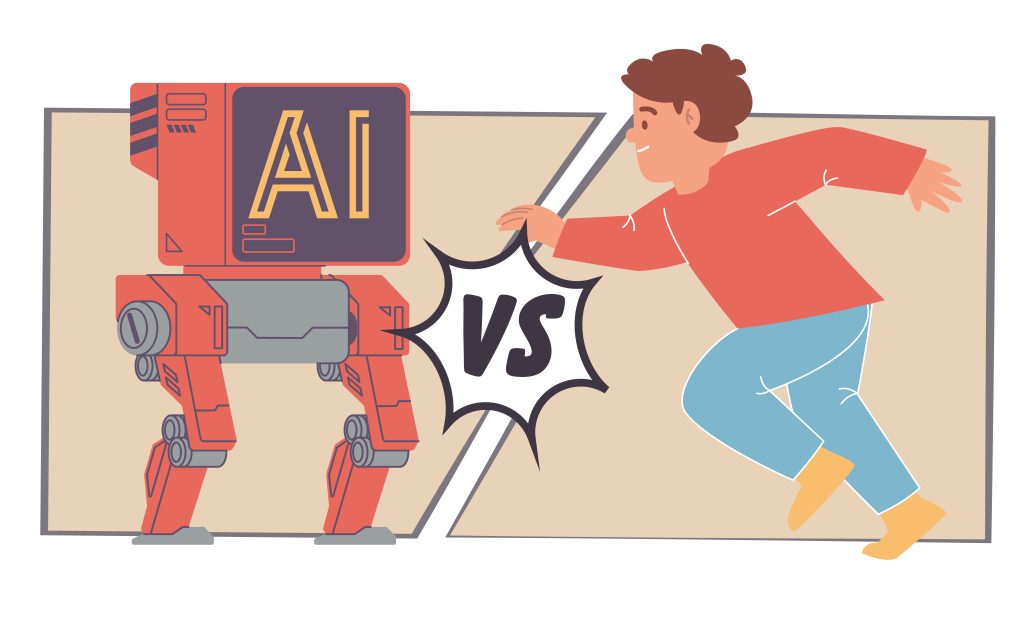
Comparing AI Captioning vs Human Captioning
Accuracy
Human captioning consistently outperforms AI captioning in complex business environments. This comparison is similar to debates around AI vs human transcription accuracy.
AI captioning accuracy may range from:
- 75% to 90% under ideal conditions
Human captioning typically achieves:
- 99%+ accuracy
The difference becomes significant when handling:
- Fast speech
- Technical terminology
- Multiple speakers
- Noisy recordings
Speed
AI captioning wins in speed.
Automated systems can generate captions within minutes, while human captioning takes longer depending on video length and complexity.
However, businesses often spend additional time correcting AI-generated errors.
Cost
AI captioning generally has lower upfront costs.
But inaccurate captions may create hidden expenses through:
- Brand damage
- Miscommunication