

Key Takeaways
- A customer urgently needed a notarized Spanish translation of U.S. pet health certificates by noon the next day; the sales consultant guided her through uploading the file, arranged a phone payment when the payment link failed, and delivered a notarized translation about 22 hours after payment.
- Two order-defining questions were notarization (constrained by notary hours) and which variety of Spanish to use; the customer chose Latin American Spanish.
- Workflow issues were handled: the customer replaced the source file before work began (minor delay), and after delivery the receiving authority requested the translation reformatted to reproduce the original form’s boxes, which became a separate layout/typesetting task.
- Clarification of terms: a certified translation is the translator’s signed statement of accuracy, notarization is a notary witnessing that signature, and an apostille is a separate government authentication — customers should confirm which is required.
- Practical advice and service details: rebuilds to match form layout require multilingual typesetting and should be requested at quote stage; same-day or 2–24 hour rush options exist for tight deadlines; submit clear scans/PDFs; revisions are free for 30 days.
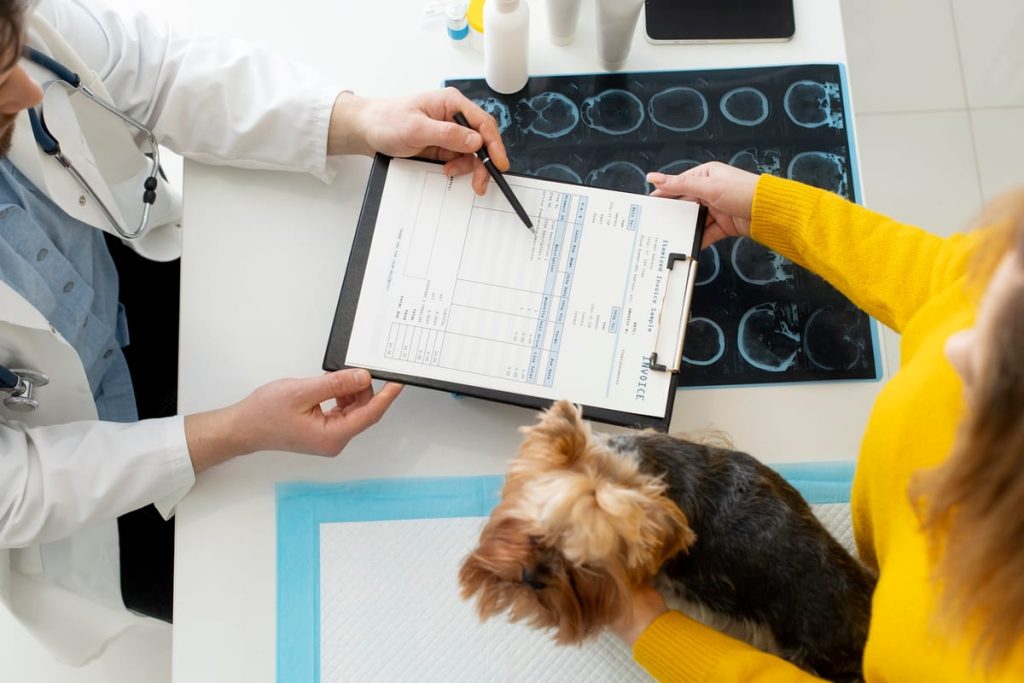
In July, a caller reached our sales team in a hurry. She was traveling abroad with her dogs, the country she was flying to required their United States veterinary paperwork in Spanish and notarized, and she wanted it by noon the next day. She was driving when she called, so she pulled over to send the file. Our consultant walked her through the upload, arranged a callback when the payment button would not open, and the notarized Spanish translation reached her half an hour before her deadline. Then came the part language alone could not settle: the receiving side wanted it laid out in the same boxes as the original form.
The Situation
The customer called our New York sales line early one afternoon and put the problem in a sentence: she was traveling overseas with her dogs, and her destination required their United States health certificate in Spanish, notarized. Asked what time she needed it, she answered “as soon as possible maybe by noon if possible.” Explore our vaccination record translation services for details.
Two questions shaped the order. One was notarization, which runs on a notary’s hours rather than a translator’s, so our consultant checked what was possible there before any time was promised. The other was the variety of Spanish: asked whether she wanted Spanish for Spain, for Latin America or for Mexico, she chose Latin American Spanish.
The records were ordinary veterinary paperwork: a rabies vaccination certification issued in the United States, plus clinic notes for the animals, logged as vital documents running to three and then four pages. That is the same work as any other vaccination record translation, where dates, product names and a veterinarian’s details have to carry over intact.
How We Handled It
A call taken from the roadside
She was driving when she reached us, and told our consultant plainly, “I’m in a rush.” Our consultant offered a callback rather than keep her on the phone at the wheel; she had already pulled over and parked. A secure link went out by email, and our consultant talked her through it until the file arrived.
A payment link that would not open
The upload worked. The payment button on the quote did not. She tried it and reported, “It doesn’t let me open it.” Our consultant resent the email; it still would not open. Rather than keep troubleshooting, we moved the problem: our accounts team called her back, payment went through by phone, and work started that afternoon.
One file replaced another before work began
About forty minutes after payment she sent a different file and asked us to work from that one: “this document replaces the first document I sent.” Our team logged it, revised the page and word counts and briefed the translator. Because this happened at intake, it cost a short delay and nothing more.
Delivered inside the window, then a question about layout
Our production team sent the Spanish translation the next morning at about half past eleven, roughly 22 hours after payment, with the signed notary page attached. That afternoon she called back. The translation was not the problem: her destination wanted the Spanish version to reproduce the original form, and she put it plainly, “every little square has to be the same.” She emailed the certificate she meant, asking for it in Spanish “in the same format as shown below,” and apologized: “I apologize for your troubles.” Our agent passed it on as a layout job rather than a rewrite, with a new internal target set for noon the next day.
The Result
She had a certified Spanish translation and its notary page before her noon deadline, and a reformatted version under way the same afternoon. Her replies were warm throughout: after work began she wrote that it was “a pleasure meeting you over the phone,” and later, simply, “you’re amazing.” Our records end while the reformatted version was in production.
What a Complete Translation of Pet Health Paperwork Covers
Veterinary travel paperwork is short but dense. A complete translation of it generally carries over:
- The animal’s description as recorded: species, breed, sex, color, age and any microchip entry
- Every vaccination line, with the product name, the lot or serial entry and the dates given and due
- The examining veterinarian’s statements, license details and signature
- Any stamp, seal or endorsement printed on the form, translated rather than summarized
- Handwritten entries, with anything unclear marked as unclear instead of guessed
A certified translation adds a signed certificate: our translator’s statement that the work is complete and accurate and that the translator is competent in both languages.
Certified, Notarized and Apostilled: Three Separate Things
A certified translation is our own human translator’s work plus that signed certificate. Notarization means a notary witnesses the translator’s signature on the certificate; it says nothing about the translation’s content, only that the signature is genuine. An apostille is a separate government step, issued by a government office rather than a translation company.
In this story the order was certified and notarized, which is what the traveler had been told to bring. Ask the authority receiving your documents which of the three it wants. Requirements differ by country and they change.
Notarization also shapes timing. Same-day delivery is available for single-page certificates, and rush translation within 2–24 hours can be arranged when dates are tight.
When the Layout Matters as Much as the Words
Most translations follow the original’s structure without copying its typography. Official forms are the exception. When a document is a grid of numbered boxes, the reader navigates by position, and a translation that reads well but sits in a different shape is harder to work with.
Say so at the quote stage. Rebuilding a form so translated text falls into the same boxes is multilingual typesetting work, easier to plan at the start than to add afterwards. Signs your document may need it:
- The original is a printed official form with numbered fields or ruled boxes
- Someone told you to submit the translation in the same format
- The form holds a table of entries that has to line up row by row
Pet Travel Paperwork and Translation in New York
New Yorkers move, study and visit family abroad constantly, and their pets travel with them. Families leaving Queens for Latin America and students heading out of the Bronx for a semester overseas meet the same short list: a veterinarian’s certificate, vaccination records, and for many destinations a translation of both.
Our office is at 224 W 35th St #1200-8, New York, NY 10001, on the 12th floor between Seventh and Eighth Avenues. The 1, 2, 3 and A, C, E trains stop at 34th Street–Penn Station and the B, D, F, M, N, Q, R and W trains at 34th Street–Herald Square. Most pet paperwork is handled by email, but notarized hard copies can be collected or mailed.
Learn more about our translation services in New York and Spanish translation in New York, or read about a rush translation over a weekend in New York.
Frequently Asked Questions
Can you translate a pet health certificate and have it notarized?
Yes. We translate veterinary health certificates, rabies and vaccination records and clinic notes with human translators, and notarization can be added. A notary witnesses our translator’s signature on the certificate of translation. Raise it at the quote stage, because a notary’s hours shape delivery.
How quickly can pet travel paperwork be translated?
Same-day delivery is available for single-page certificates, and rush delivery within 2–24 hours can be arranged. In this story the customer asked one afternoon for delivery by noon the next day, and the notarized Spanish translation was sent about 22 hours after payment, roughly half an hour inside her deadline.
Which variety of Spanish should I ask for?
Ask the office that will receive the document. Latin American Spanish and Spanish for Spain differ in vocabulary and some conventions, and Mexican usage differs again. In this story our consultant asked before work started, and the customer chose Latin American Spanish.
Can the translation be laid out to match the original form?
Often, yes. Rebuilding a translated document so its text falls into the same boxes and rows is typesetting work on top of translation, so tell us at the quote stage if the receiving office expects it. In this story the customer learned only after delivery that her destination wanted it.
What should I send, and in what format?
A clear, complete scan or photo of every page, including the back of any page carrying stamps or signatures. PDF is ideal; a sharp phone photo works if the whole page is in frame, in focus and evenly lit. Send related documents together so names and dates stay consistent.
What happens if I spot a mistake after delivery?
Tell us what you found and we will correct it. Revisions are free for 30 days after delivery, and corrections are usually returned within 24 to 48 hours. If your document was notarized, a corrected version is notarized again on the revised text, so read the file as soon as it arrives.
Traveling Soon With Your Pet?
Send us the health certificate and vaccination records, tell us your travel date and whether you need notarization, and we will confirm the turnaround in your quote. Get a free quote or call 1-800-230-7918. Vanan Services has served customers since 2009 and is rated 4.9 stars from 970+ Google reviews.
This story is based on a real Vanan Services order. Names, dates and other identifying details have been removed to protect our customer’s privacy.