
When it comes to legal documents, even the smallest translation mistake can lead to massive financial losses, voided contracts, or even lawsuits.
And here’s the shocking truth: most legal professionals don’t realize how often these mistakes happen—or how easily they can be prevented.
Businesses and legal teams that who on international agreements must understand how dangerous legal translation errors can be.
This article breaks down everything you need to know, using real-world examples and actionable solutions to help you stay protected.
Key Takeaways
- Translation mistakes in legal documents can cause lawsuits, delays, financial losses, or invalid contracts.
- Legal language is complex, meaning standard translators often introduce dangerous errors.
- Using certified legal translators, glossaries, quality checks, and AI-assisted workflows dramatically reduces risk.
- Legal professionals and businesses should establish strict translation protocols to avoid costly mistakes.
Why Legal Translation Mistakes Are So Dangerous?
Legal language is extremely precise.
A single mistranslated word can completely change legal meaning.
Here’s why this matters:
- Legal documents often involve contracts, compliance laws, immigration filings, patents, mergers, and government regulations.
- These documents require exact meaning, not just linguistic accuracy.
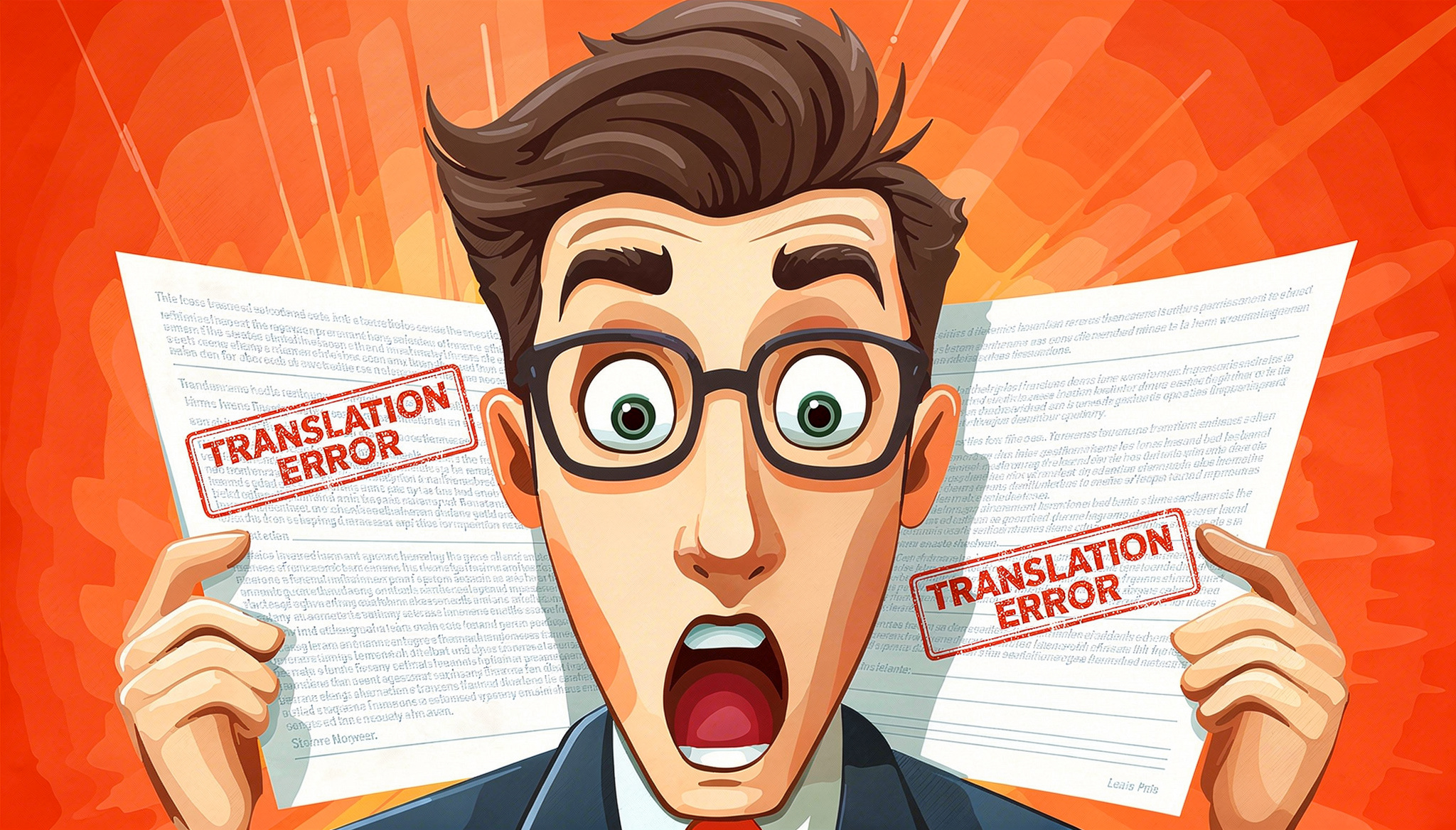
- Courts do not accept “translation error” as a valid excuse when disputes arise.
The Most Common Types of Translation Mistakes in Legal Documents
Below are the errors legal professionals encounter most often—and why they happen so frequently.
1. Terminology Errors: When a Word Is Legally Wrong
A standard translator may understand a language, but not legal terminology.
Examples:
| Incorrect Term | Correct Term | Consequence |
|---|---|---|
| Partner | Shareholder | Incorrect business structure |
| Warranty | Guarantee | Wrong liability obligations |
| Shall | May | Contract enforceability issues |
A single word can change obligations, responsibilities, or ownership.
2. Misinterpreting Cultural or Legal System Differences
Legal systems differ between countries.
For example:
- The concept of common law vs civil law
- Differences in corporate structures
- Variation in liability standards
- Unique property and inheritance rules
Translators unfamiliar with these frameworks often misapply legal logic, leading to invalid documents.
3. Formatting, Numbering, and Clause Errors
Legal translation requires more than accurate wording.
Errors often occur in:
- Misnumbered clauses
- Removed or altered formatting
- Missing signatures or stamps
- Incorrect dates (e.g., U.S. vs European format)
Courts may reject filings if formatting does not match jurisdictional standards.
4. Ambiguity Introduced by Poor Translation
A sentence that is ambiguous in translation becomes a liability.
Example:
“Employees must notify management before travel.”
Which one is correct translation?
- Must notify any manager?
- Must notify direct supervisor only?
Ambiguity creates loopholes — and loopholes cause disputes.
Real Cases Where Legal Translation Mistakes Caused Major Losses
These examples highlight how dangerous small mistakes can be.
Case #1: A $71 Million Loss Due to One Wrong Word
A Japanese company mistranslated a contractual term relating to product defects.
The incorrect translation made the company responsible for damages it never agreed to cover.
Result: $71 million lawsuit.
Case #2: Immigration Application Rejected Over Simple Translation Error
An applicant’s job title was incorrectly translated into something unrelated to their actual experience.
The government refused the application due to “inconsistency.”
A one-word mistranslation cost them years of delay.
Case #3: Patent Rejected Because of Incorrect Technical Terminology
A mistranslated phrase caused a patent application to describe the wrong mechanism.
The patent office denied approval—forcing the business to refile at enormous cost.
Why Translation Mistakes Happen—Even with Professional Translators
Legal translation requires more than fluency.
Here’s why mistakes still occur:
- Legal terminology differs between jurisdictions
- Some languages lack equivalent legal concepts
- General translators lack legal training
- Technical fields (medical, engineering, financial) require subject-matter knowledge
- Fatigue or manual processes create human error
Even native speakers can mistranslate legal concepts if they lack legal expertise.
How to Avoid Legal Translation Mistakes: A Step-by-Step System
Below is a professional workflow legal teams should use for every translated document.
1. Always Use Certified Legal Translators
Not just bilingual—legally trained.
A certified legal translator:
- Knows legal terminology
- Understands jurisdiction-specific standards
- Follows compliance requirements
- Reduces liability for your firm
Never rely on general translation services for legal documents.
2. Create a Legal Terminology Glossary for Your Business
This ensures consistency across:
- Contracts
- Compliance filings
- HR documents
- International agreements
A glossary prevents translators from using ambiguous or incorrect terms.
3. Use Dual Review: Legal Expert + Translator
This two-step process dramatically lowers risk:
- Translator provides linguistically accurate text
- Legal expert checks for meaning, intent, and legal validity
This is essential for complex documents such as:
- Licensing agreements
- Intellectual property filings
- Government compliance forms
- Cross-border contracts
4. Use AI Tools for Quality Control
AI does not replace legal translators.
But it is excellent for:
- Finding inconsistencies
- Detecting unclear phrasing
- Highlighting terminology mismatches
- Flagging duplicate or missing clauses
AI + human expertise provides the most reliable results.
5. Use Back-Translation Before Final Approval
Back-translation means re-translating the document into its original language.
If meaning has changed, you’ll catch the error immediately.
This method identifies:
- Ambiguities
- Distortions
- Incorrect terminology
- Missing sections
It is widely used in high-risk industries like pharmaceuticals and aviation.
Which Legal Documents Require the Highest Translation Accuracy?
Below is a table that shows the risk level for each type of legal document.
| Document Type | Risk Level | Why Accuracy Is Critical |
|---|---|---|
| Contracts | Very High | Misinterpretation causes lawsuits |
| Intellectual Property | Very High | Patents can be rejected |
| Compliance Documents | High | Regulatory violations |
| Corporate Documents | High | Structure and obligations affected |
| Court Filings | Medium–High | Incorrect language delays cases |
| HR & Employment Forms | Medium | Policy compliance issues |
If your practice or business handles any of these, translation accuracy must be a top priority.
Red Flags That Your Legal Translation Might Be Inaccurate
Watch out for these warning signs:
- The translator cannot explain legal terminology
- Sentences become unusually long or awkward
- Terms are inconsistent across the document
- Numbers, dates, and clause references don’t match
- The translator lacks subject-matter expertise
- The translation sounds “too literal”
If you see any of these, request a review immediately.
How Legal Professionals Can Protect Themselves From Liability?
Here are practical steps to reduce risk in your firm or organization:
- Use vetted, certified legal translators
- Add translation quality checks to your compliance protocols
- Maintain internal glossaries and document templates
- Use AI tools to automate review
- Require signatures from translators confirming accuracy
- Store all versions and revisions securely
These steps create a defensible process that protects your organization from disputes.
FAQs
Why are legal translation mistakes so common?
Because legal language is extremely technical, most translators lack legal training. Legal concepts also differ between countries, making translation even harder.
Can AI replace a legal translator?
No. AI is a helpful assistant, but legal translation requires human legal expertise to ensure accuracy and validity.
What happens if a contract is mistranslated?
The consequences may include lawsuits, invalid agreements, financial penalties, or regulatory violations. Courts rarely accept “translation error” as a defense.
Do I need a certified legal translator?
Yes—especially for contracts, patents, and compliance filings. Certification reduces errors and increases defensibility.
What is back-translation, and why is it important?
Back-translation re-translates the document back into the original language.
It exposes mistakes that are otherwise difficult to detect.
Conclusion: Protect Your Business by Getting Legal Translations Right
Legal translation mistakes are more common—and far more dangerous—than most professionals realize.
But with the right process, certified experts, and quality checks, you can eliminate the risks and protect your organization from costly consequences.
If you’d like, I can also generate a downloadable checklist, a glossary, or templates for legal translation workflows.
Related Blogs
Quick picks you might like next