
Key Takeaways
- The Oscars are a global cultural event requiring professional translation services for accessibility, allowing non-English speaking audiences to engage with the ceremony.
- Live broadcast translation, including simultaneous interpretation and live subtitling, is crucial to convey acceptance speeches and unscripted moments in real-time to international viewers.
- Cultural localization is essential for adapting humor, political statements, and social commentary to ensure they resonate with diverse audiences across different regions.
- Translation services also play a vital role in the distribution of nominated films, affecting international reception through subtitles and dubbing that preserve emotional and thematic nuances.
- The Oscars illustrate the globalization of cinema, where translation enables cross-border distribution and cultural exchange, making storytelling a universal experience.
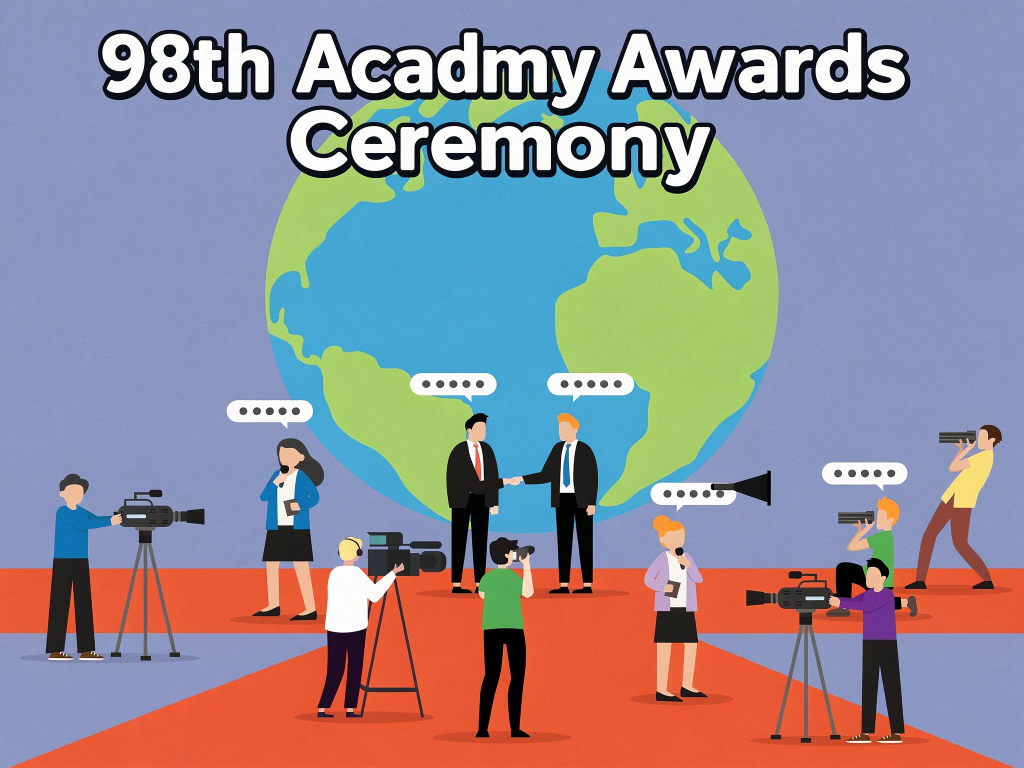
The Academy Awards—popularly known as the Oscars—represent more than a celebration of cinematic excellence. They are a global cultural event watched by millions across continents, languages, and time zones. From Seoul to São Paulo, from Berlin to Beirut, audiences tune in not only to see who wins Best Picture but to witness a shared moment in global storytelling.
Yet behind the glamour of red carpets and acceptance speeches lies a critical infrastructure that makes this international engagement possible: professional translation services. Without translation, subtitling, dubbing, localization, and multilingual media adaptation, the Oscars would remain a predominantly English-language broadcast with limited accessibility.
For film industry professionals, media companies, translators, and global cinema enthusiasts, understanding the role of translation services in the Oscars ecosystem reveals how Hollywood truly operates without borders.
The Oscars as a Global Media Event
The Oscars are broadcast in over 200 territories worldwide. The event reaches diverse audiences—film professionals, critics, students, fans, and cultural commentators—many of whom do not speak English as their primary language.
In recent years, the Academy has also made deliberate efforts to internationalize its membership and nominations. Films like Parasite (South Korea), Roma (Mexico), Drive My Car (Japan), and All Quiet on the Western Front (Germany) demonstrate that the Oscars are no longer confined to English-language productions. The ceremony now reflects a global cinematic dialogue.
This evolution makes translation not just a technical necessity, but a strategic enabler of cultural exchange.
Live Broadcast Translation: Real-Time Accessibility
One of the most complex aspects of the Oscars is the live broadcast. Acceptance speeches, spontaneous humor, emotional reactions, and unscripted moments unfold in real time. For international viewers, simultaneous interpretation or live subtitling ensures that these moments are not lost.
Simultaneous Interpretation
Many broadcasters provide live voiceover translation or interpretation in local languages. This requires highly trained interpreters capable of:
- Processing fast-paced speech
- Understanding industry-specific terminology
- Handling cultural references and humor
- Interpreting emotional nuance
Acceptance speeches often include personal anecdotes, political statements, or industry jargon. Misinterpretation can alter meaning or diminish impact. Professional interpreters must balance accuracy with speed, ensuring that international viewers experience the event as closely as possible to the original audience.
Live Subtitling
In regions where subtitling is preferred over voiceover, live captioning technology combined with skilled linguists ensures that speeches are accurately transcribed and translated in real time. This is especially important for accessibility compliance, including services for the deaf and hard-of-hearing community.
Subtitling and Dubbing of Nominated Films
Long before the Oscars ceremony, translation services play a crucial role in the distribution and evaluation of nominated films.
For Academy Members
With a growing international membership base, the Academy relies heavily on professionally translated screeners. Subtitles must reflect:
- Precise dialogue meaning
- Cultural nuance
- Tone and character voice
- Industry-specific terminology
Poor translation can significantly affect a film’s reception. Subtle emotional shifts or thematic depth may be lost if subtitles fail to convey nuance accurately.
For Global Audiences
When nominated films are released internationally, localization becomes essential. Depending on the region, this may involve:
- Subtitling (common in Europe and parts of Asia)
- Full dubbing (common in Germany, France, Italy, Spain, and Latin America)
- Hybrid approaches with localized marketing materials
High-quality translation ensures that performances resonate across languages. For instance, the global success of Parasite was supported by carefully crafted subtitles that preserved humor, social commentary, and emotional depth.
Cultural Localization Beyond Language
Translation services for the Oscars extend beyond word-for-word conversion. Cultural localization is critical in making content meaningful for international audiences.
Humor and Cultural References
The Oscars often include jokes referencing:
- American politics
- Hollywood scandals
- U.S. pop culture
- Industry insiders
These references may not resonate internationally without adaptation. Skilled translators must decide whether to:
- Provide direct translations
- Adapt references to culturally equivalent expressions
- Add contextual clarification
The goal is not literal translation but functional equivalence—ensuring that the audience experiences the intended effect.
Political and Social Statements
Speeches at the Oscars sometimes address global issues such as climate change, human rights, diversity, and representation. Translators must handle these moments carefully to preserve tone and avoid misinterpretation.
Given the global visibility of the event, accuracy is paramount. A mistranslation can spark controversy or misrepresent the speaker’s intent.
Marketing and Promotional Localization
The Oscars are more than an awards ceremony; they are a marketing engine for the global film industry.
Studios and distributors localize promotional materials for international markets, including:
- Press releases
- Social media content
- Trailers
- Posters
- Media interviews
- Official websites
Translation professionals ensure consistency in terminology, film titles, taglines, and campaign messaging. In some cases, film titles are adapted entirely to suit cultural and commercial expectations.
For example, a direct translation may not convey the emotional or thematic weight needed for a specific market. Strategic localization enhances audience engagement and box office performance.
Red Carpet Interviews and Global Media Coverage
The red carpet is a significant component of Oscars coverage. International media outlets conduct interviews with nominees and winners. These interviews are translated for:
- Television broadcasts
- Online streaming platforms
- Social media distribution
- Print and digital journalism
Here, translation services operate in multiple formats:
- On-site interpreters for live interviews
- Post-production subtitle translation
- Translated transcripts for international publications
Accuracy, speed, and stylistic consistency are critical. Media companies rely on translation professionals to deliver polished content within tight deadlines.
Accessibility and Inclusion
As the entertainment industry prioritizes diversity and inclusion, accessibility has become central to global broadcasting.
Closed Captioning and Subtitles for the Deaf and Hard of Hearing (SDH)
These services go beyond dialogue translation. They include:
- Sound cues
- Music descriptions
- Speaker identification
Providing multilingual SDH ensures that viewers with hearing impairments can fully engage with the ceremony.
Multilingual Streaming Platforms
With streaming services expanding globally, Oscar-related content is often distributed through platforms offering multiple language options. This includes:
- Multilingual subtitles
- Audio descriptions
- Dubbing for highlight segments
Translation services make the Oscars inclusive not just geographically, but also across ability and accessibility needs.
The Role of Technology in Oscar Translation
Technology has significantly enhanced translation workflows, especially for large-scale events like the Oscars.
AI-Assisted Translation
Machine translation tools can support preliminary drafts, especially for promotional materials and transcripts. However, human linguists remain essential for:
- Quality control
- Cultural adaptation
- Tone and nuance preservation
- Industry terminology management
AI accelerates processes, but the emotional and artistic nature of film requires human expertise.
Remote Interpretation and Cloud-Based Collaboration
Global translation teams can now collaborate in real time using cloud-based platforms. This allows broadcasters to coordinate multilingual coverage efficiently, even across time zones.
Challenges in Translating the Oscars
While translation services enable global access, they also face unique challenges:
Time Sensitivity
Live broadcasts demand immediate output. Errors must be minimized despite intense time pressure.
Industry-Specific Vocabulary
Film terminology, union references, production roles, and technical jargon require subject-matter expertise.
Emotional Authenticity
Acceptance speeches often contain deeply personal stories. Translators must preserve emotional resonance while maintaining linguistic accuracy.
Cultural Sensitivity
Certain humor or commentary may not translate well cross-culturally. Localization must balance authenticity with audience reception.
Translation as a Driver of Global Cinema
The Oscars increasingly reflect the globalization of film production and consumption. International filmmakers now compete on equal footing with Hollywood studios, and global audiences influence award narratives.
Translation services support this ecosystem by:
- Enabling cross-border distribution
- Facilitating international award campaigns
- Ensuring equitable access to storytelling
- Promoting cultural exchange
Without translation, global cinema would remain fragmented. With it, stories transcend borders.
For Film Industry Professionals and Media Companies
Understanding the strategic value of translation is critical for industry stakeholders.
For Studios and Distributors
Investing in professional translation improves:
- International market reach
- Brand consistency
- Critical reception
- Award campaign effectiveness
For Media Organizations
Reliable translation ensures:
- Accurate reporting
- Faster global publication
- Wider audience engagement
For Translators and Language Service Providers
The Oscars represent an opportunity to showcase high-level expertise in audiovisual translation, live interpretation, and cultural localization. The complexity of the event highlights the importance of specialized training in entertainment and media translation.
Hollywood Without Borders
The Oscars symbolize excellence in storytelling. But storytelling only becomes universal when it is understood.
Professional translation services transform a primarily English-language ceremony into a global cultural experience. They ensure that a filmmaker’s heartfelt gratitude, a comedian’s punchline, or a political message resonates far beyond the Dolby Theatre in Los Angeles.
As the Academy continues to diversify its membership and nominees, translation will remain central to its global identity. The future of cinema is multilingual, multicultural, and interconnected.
Hollywood without borders is not simply a metaphor—it is a reality made possible by the expertise of translators, interpreters, subtitlers, and localization professionals who work behind the scenes.
When audiences around the world applaud a winner, laugh at a joke, or are moved by a speech, they are participating in a shared moment made accessible through language.
And in that moment, cinema truly becomes universal.