
Key Takeaways
- Pi Day, celebrated on March 14, transcends borders and cultures, showcasing mathematics as a universal language and a shared intellectual heritage.
- Educators play a crucial role in transforming Pi Day into a meaningful cross-cultural learning experience by integrating history and cultural context into their lessons.
- Pi Day serves as a platform for collaborative global projects in schools, allowing students from different countries to engage in shared mathematical activities and discussions.
- Real-world applications of π in fields like engineering, space exploration, medicine, and technology highlight its significance in global innovation and collaboration.
- Pi Day fosters curiosity and encourages interdisciplinary learning by connecting mathematics with art, music, and technology, inspiring students to explore and innovate.
Introduction: When Numbers Speak a Universal Language
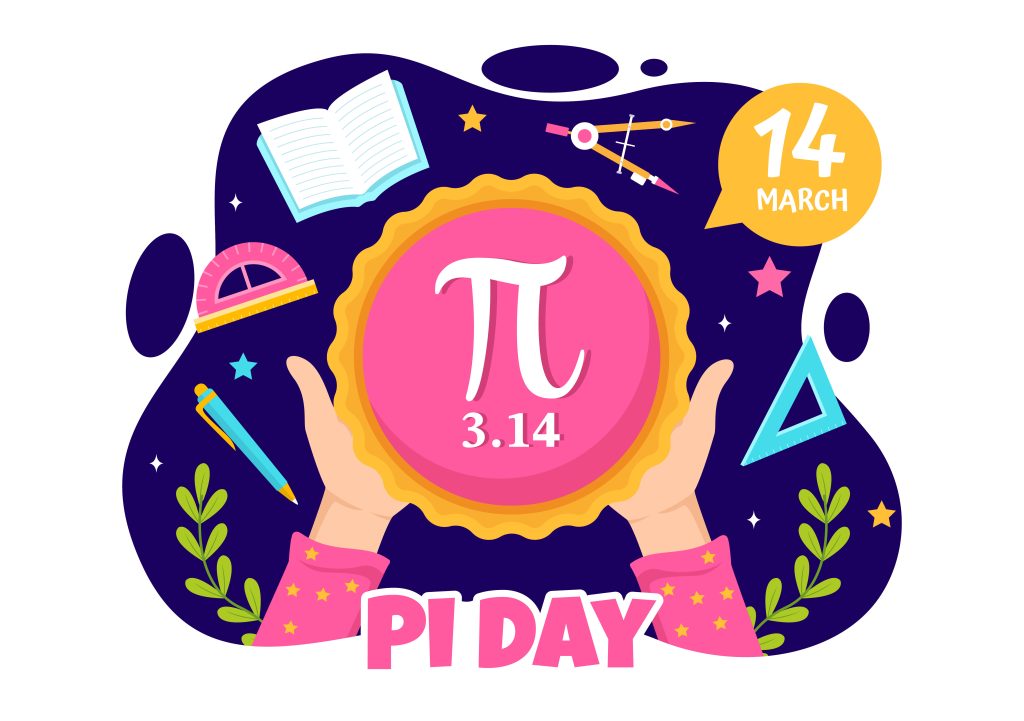
Every year on March 14 (3/14), classrooms, universities, and STEM communities around the world celebrate Pi Day—a tribute to the mathematical constant π (pi), approximately 3.14159. While it may seem like a niche celebration for mathematicians, Pi Day has evolved into something much more meaningful: a global cultural event that demonstrates how mathematics transcends borders, languages, and traditions.
At its core, Pi Day is about curiosity—the human drive to measure, explore, and understand the world. From ancient civilizations calculating circles to modern scientists exploring the cosmos, π has been a constant companion in humanity’s intellectual journey.
For educators, students, international schools, and STEM organizations, Pi Day presents a unique opportunity. It’s not just about reciting digits or eating pie; it’s about fostering cross-cultural dialogue, celebrating shared intellectual heritage, and inspiring global collaboration through mathematics.
The Universal Nature of Pi
Unlike spoken languages, mathematics is often described as a universal language. Symbols, formulas, and constants carry the same meaning in Tokyo, Nairobi, São Paulo, and New York. π represents the ratio of a circle’s circumference to its diameter—no matter the country, the culture, or the era.
Ancient civilizations across the globe independently approximated π:
- Babylonians estimated it around 3.125.
- Ancient Egyptians used a value close to 3.16.
- Archimedes of Greece developed one of the earliest systematic methods for approximating π.
- Chinese mathematician Zu Chongzhi calculated π to seven decimal places in the 5th century.
- Indian mathematicians, including Aryabhata, made significant contributions to trigonometry and π approximations.
These discoveries were not isolated achievements; they represent a global mosaic of intellectual effort. Pi Day, therefore, is not owned by one nation or tradition—it is a shared celebration of human ingenuity.
Pi Day as a Cultural Bridge
1. Shared Celebration Across Borders
Pi Day events now occur in schools, universities, science museums, and community centers worldwide. Students compete in memorization contests, explore circular geometry projects, and host interdisciplinary activities blending math, art, and music.
For international schools and exchange programs, Pi Day offers a platform for collaborative activities:
- Virtual global classrooms connecting students from different countries.
- International digit recitation competitions.
- Joint STEM projects comparing historical mathematical approaches.
Such events encourage students to see themselves not only as learners in a local classroom but as members of a global academic community.
2. Mathematics Beyond Language Barriers
In multicultural classrooms, language differences can sometimes create communication gaps. Mathematics, however, often becomes common ground.
When students work together to calculate areas, explore infinite series, or investigate real-world applications of π, they engage through logic and reasoning rather than vocabulary alone. This shared intellectual engagement builds confidence and mutual respect.
For cultural exchange programs, Pi Day activities can serve as inclusive academic events where participants collaborate regardless of linguistic background.
The Role of Educators in Globalizing Pi Day
Educators play a crucial role in transforming Pi Day from a fun observance into a meaningful cross-cultural learning experience.
Integrating History and Cultural Context
Teachers can highlight the global history of π, emphasizing contributions from diverse civilizations. By doing so, students gain an appreciation for how knowledge evolves through collaboration across centuries and cultures.
Lesson ideas include:
- Comparative studies of ancient approximations of π.
- Research projects on mathematicians from different regions.
- Timeline activities showing how mathematical ideas traveled across continents.
Encouraging Interdisciplinary Learning
Pi Day can also bridge mathematics with:
- Art: Exploring symmetry, mandalas, circular design, and geometric patterns found in various cultures.
- Music: Investigating rhythms and patterns influenced by mathematical ratios.
- Technology: Coding simulations that generate digits of π.
- Geography: Studying how architectural wonders incorporate circular designs.
This interdisciplinary approach reflects the interconnected nature of knowledge across cultures.
Pi Day in International Schools
International schools are uniquely positioned to leverage Pi Day as a multicultural celebration.
Collaborative Global Projects
Schools can organize cross-border initiatives such as:
- Students from different countries contributing digits of π in their native languages.
- Virtual math fairs showcasing student research.
- Collaborative digital presentations comparing educational systems’ approaches to teaching geometry.
These activities promote digital literacy, teamwork, and cultural awareness alongside mathematical understanding.
Celebrating Diversity Through Numbers
In diverse classrooms, Pi Day can incorporate cultural elements:
- Traditional circular foods from different cultures (flatbreads, dumplings, tarts).
- Cultural storytelling about astronomical observations and circular symbolism.
- Artistic representations of circles in indigenous and traditional designs.
Such integration reinforces the idea that mathematics is embedded in everyday life across cultures.
STEM Organizations and Global Outreach
STEM organizations can use Pi Day as an anchor event for international outreach initiatives.
Promoting Global STEM Literacy
Workshops, webinars, and community science events around Pi Day can connect participants worldwide. Virtual seminars featuring mathematicians from different countries demonstrate that innovation is a global endeavor.
STEM nonprofits and educational institutions can:
- Host multilingual webinars on the history and applications of π.
- Develop international math challenge competitions.
- Partner with cultural organizations to broaden outreach.
Encouraging Inclusive Participation
Mathematics has not always been equally accessible to all communities. Pi Day presents an opportunity to promote inclusivity by:
- Highlighting underrepresented mathematicians.
- Offering free educational resources.
- Organizing community-based learning events.
By making mathematics approachable and celebratory, organizations can inspire future generations of global problem-solvers.
Pi Beyond the Classroom: Real-World Global Applications
Pi is far more than a classroom concept. It underpins global technological and scientific progress.
Engineering and Architecture
From bridges in Europe to skyscrapers in Asia and stadiums in the Americas, circular structures rely on π for design and stability. Engineers worldwide use the same mathematical principles to create safe and functional infrastructure.
Space Exploration
International space agencies depend on precise calculations involving π for orbital mechanics, satellite trajectories, and planetary exploration. Collaborative missions between nations underscore how shared mathematical principles drive global innovation.
Medicine and Technology
Medical imaging technologies such as CT scans and MRIs use circular measurements and rotational mathematics. Technology companies across continents rely on π in software, hardware design, and data analysis.
These real-world applications reinforce Pi Day’s broader message: mathematics unites global industries and research communities.
Fostering Mathematical Curiosity Across Cultures
Curiosity is universal. Children everywhere ask questions about shapes, patterns, and the world around them. Pi Day taps into that innate curiosity.
Inspiring Young Learners
Interactive Pi Day activities can include:
- Building circular objects and measuring circumference.
- Creating π-themed art projects.
- Conducting hands-on experiments with everyday materials.
These experiences make mathematics tangible and relatable, encouraging lifelong learning.
Encouraging Advanced Exploration
For older students and math enthusiasts, Pi Day can be an opportunity to explore:
- Infinite series and irrational numbers.
- Computational mathematics.
- Statistical randomness in π’s digits.
Advanced discussions connect learners to global mathematical research communities.
Technology as a Bridge
Modern technology allows Pi Day to transcend physical boundaries.
Virtual Celebrations
Online platforms enable:
- Global digit recitation marathons.
- Collaborative coding sessions.
- Live-streamed lectures from international experts.
Virtual engagement ensures that even geographically distant schools can participate in shared experiences.
Open Educational Resources
Digital tools and open-access materials allow educators worldwide to integrate high-quality math content into their classrooms. Sharing lesson plans and activity guides encourages collaboration among teachers globally.
Cultural Symbolism of Circles
The circle itself carries symbolic meaning across cultures:
- In many traditions, circles represent unity and eternity.
- Indigenous art often features circular motifs symbolizing life cycles.
- Mandalas in South Asian cultures represent harmony and wholeness.
By exploring these symbolic meanings, educators can connect geometry with cultural understanding, enriching Pi Day celebrations with depth and inclusivity.
Practical Ideas for Global Pi Day Celebrations
For schools and organizations aiming to create impactful Pi Day events, consider:
- International Digit Exchange: Each classroom contributes digits in different languages.
- Global Math Panels: Invite speakers from multiple countries.
- Cultural Math Fair: Highlight mathematical achievements from various civilizations.
- STEM Collaboration Challenges: Teams solve global engineering problems.
- Community Outreach: Partner with local cultural groups for inclusive events.
These activities foster collaboration while maintaining academic rigor.
The Future of Pi Day as a Global Celebration
As education becomes increasingly interconnected, Pi Day has the potential to evolve into a truly global academic festival. With technology enabling real-time collaboration, students from different continents can solve problems together, share perspectives, and celebrate shared achievements.
For educators and STEM leaders, Pi Day is more than a calendar event. It’s an opportunity to:
- Promote global citizenship.
- Encourage interdisciplinary learning.
- Highlight the universal relevance of mathematics.
- Inspire collaborative innovation.
Conclusion: Numbers Without Borders
Pi Day reminds us that while cultures differ in language, tradition, and geography, the pursuit of knowledge is universal. The constant π—unchanging and infinite—symbolizes humanity’s shared curiosity and intellectual heritage.
For educators, international schools, cultural exchange programs, and STEM organizations, Pi Day is a powerful tool. It demonstrates that mathematics is not confined by borders; it connects classrooms, research labs, and communities around the world.
By celebrating Pi Day with cultural awareness and collaborative spirit, we teach students more than geometry—we teach them that knowledge transcends boundaries and that curiosity unites us all.
In a world that often emphasizes differences, Pi Day stands as a reminder that numbers speak a language we all understand.